Winterizing Mobile Home HVAC Systems Against Bishop's Freezing Nights
Winterizing Mobile Home HVAC Systems Against Bishop's Freezing Nights
The September Pre-Freeze Transition: Securing Your Mobile Home
At MCR Services Inc., we consider the September pre-freeze transition a critical window for homeowners in the Eastern Sierra, making Winterizing Mobile Home HVAC Systems Against Bishop's Freezing Nights an immediate priority. Late summer days in the high desert can still feel comfortably warm, but those extreme diurnal temperature shifts mean nighttime lows are already preparing to plummet. When the sun drops behind the mountains, the temperature often falls rapidly, leaving unprepared homes vulnerable to sudden, severe cold.
For mobile home owners, this weather pattern presents a highly specific set of challenges. Standard residential checklists simply do not account for the architectural realities of manufactured housing. Without a deep, insulated foundation, your property faces massive heat loss through exposed underbellies and vulnerable ductwork. Securing your heating systems requires specialized attention before the first hard freeze hits. Waiting until late October or November to address these structural vulnerabilities often leads to emergency system lockouts right when you need reliable warmth the most.
The immediate threat: Freezing wind sweeping beneath the structure strips heat away faster than your furnace can produce it. By taking proactive steps now, you protect your equipment from overworking, reduce your monthly utility expenses, and ensure your home remains comfortable through the harshest winter nights.
Why Standard Residential Winterization Fails Mobile Homes
Most generic online advice for preparing a house for winter assumes the building sits on a concrete slab or over a deep, conditioned basement. Mobile homes operate under entirely different structural rules. Because they are elevated on piers, the entire footprint of the structure is exposed to the outside air. When the ground-level temperature drops below freezing, cold wind actively pulls heat through the floorboards.
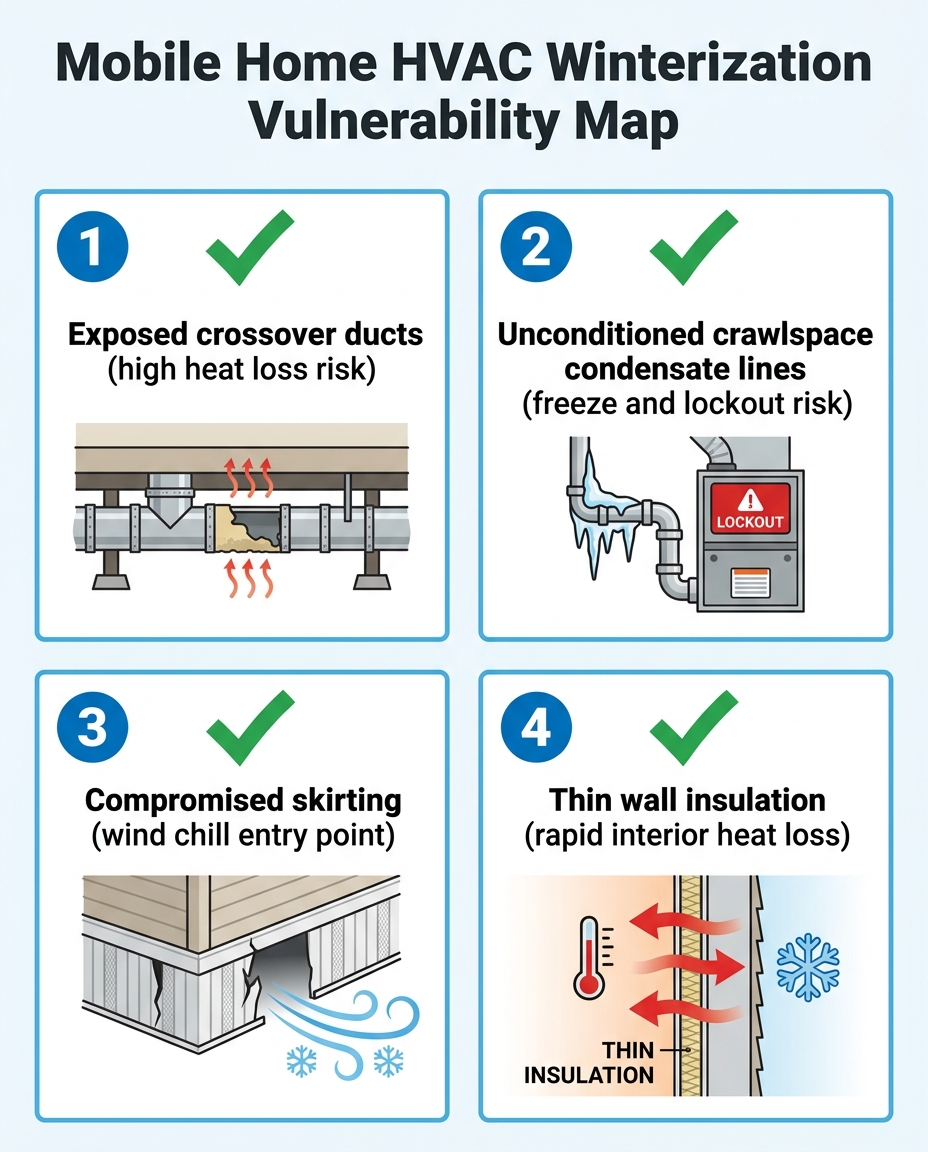
Thin wall insulation accelerates the problem: Manufactured homes typically feature thinner exterior walls than site-built properties. With less cavity space for high R-value insulation, the interior loses heat much faster. Your furnace is forced to run longer cycles just to maintain a baseline temperature. If the underbelly is also compromised, the equipment works twice as hard, leading to premature wear and tear.
As Eastern Sierra local experts who service Bishop area mobile home parks year-round, our team at MCR Services Inc. understands the specific infrastructure of these communities. We know from years of hands-on experience that applying a standard residential checklist to a manufactured home leaves critical failure points completely exposed. Proper winterization requires localized, structure-specific strategies designed for the high desert climate. If you are looking for reliable HVAC services in Bishop, you need a team that recognizes these unique architectural differences.
• Foundation — Site-Built Home Reality: Earth-insulated basement or solid concrete slab. — Mobile Home Vulnerability: Elevated on piers; full exposure to freezing wind beneath the floor.
• Ductwork Location — Site-Built Home Reality: Often routed through conditioned interior walls or basements. — Mobile Home Vulnerability: Suspended in the unconditioned crawlspace or underbelly.
• Wall Thickness — Site-Built Home Reality: Standard 2x6 framing allows for thick, high R-value insulation. — Mobile Home Vulnerability: Thinner walls limit insulation depth, accelerating rapid heat loss.
• Moisture Control — Site-Built Home Reality: Managed through standard attic and foundation venting. — Mobile Home Vulnerability: Requires precise skirting ventilation to prevent ground moisture buildup.
Mobile Home HVAC Winterization Vulnerability Map
Protecting Crossover Ducts and Skirting Integrity
In double-wide manufactured homes, the two halves of the structure are connected by a large, flexible pipe known as a crossover duct. This duct is responsible for delivering heated air from the main furnace trunk to the other side of the house. Because it hangs in the unconditioned space beneath the floor, it is arguably the single largest vulnerability in your entire HVAC system.
According to U.S. Department of Energy (DOE) guidelines, manufactured homes suffer severe heat loss through compromised floors and underbellies. If the outer insulation of a crossover duct is torn by pests, or if the connection collar sags over time, your furnace ends up pumping expensive heated air directly into the freezing outdoors. Inspecting and sealing these connections is a vital part of any seasonal home prep checklist.
The Role of Skirting in Climate Control
Skirting is your home's first line of defense against the elements. It prevents freezing air from sweeping under the property and stripping heat away from your ductwork and plumbing. However, skirting must be managed correctly to balance insulation with ventilation.
• Blocking extreme cold: Intact panels stop high winds from creating a wind tunnel effect beneath your floorboards, which drastically lowers the ambient temperature around your crossover ducts.
• Managing moisture: Skirting must retain proper ventilation to prevent ground moisture from accumulating. Trapped moisture leads to condensation on cold metal HVAC components, which then freezes.
• Pest prevention: Secure skirting keeps rodents out. Pests actively seek out the warmth of crossover ducts in the winter, chewing through the outer lining to nest in the fiberglass insulation.
Having a licensed professional inspect the integrity of your underbelly wrap, crossover ducts, and skirting ventilation ensures that your heating system isn't fighting a losing battle against the elements in Bishop area mobile home parks.
Preventing HVAC Lockouts from Frozen Condensate Lines
One of the most misunderstood threats to heating systems in the high desert involves water, not just cold air. High-efficiency furnaces (typically those rated at 90% AFUE or higher) extract so much heat from the combustion process that the exhaust gases cool and condense into liquid water. This acidic water must drain out of the system continuously while the furnace runs.
Because of the rapid temperature plummet after sunset in Bishop, this creates a highly localized threat that our technicians see year after year. During the day, the system runs and produces condensation. As that water drains down into the unconditioned crawlspace beneath the mobile home, it faces freezing temperatures overnight. If the condensate drain line is improperly routed, lacks insulation, or sags to create a trap, the water inside freezes solid.
The lockout mechanism: Once the drain line freezes, the water backs up into the furnace. Modern heating systems are equipped with safety pressure switches and float switches designed to prevent internal flooding. When the switch detects backed-up water, it shuts the entire system down. This triggers a complete HVAC lockout, leaving you without heat precisely when the outside temperature is at its lowest.
Safely rerouting, pitching, or insulating these condensate lines is not a DIY project. It requires a licensed HVAC professional who understands both the local climate and the specific drainage requirements of high-efficiency mobile home furnaces. At MCR Services Inc., we strongly recommend addressing this during the September pre-freeze transition to prevent the midnight emergency lockouts our dispatchers routinely handle every winter.
Because the underbelly is the source of so many heat loss and freezing issues, many homeowners are choosing to bypass traditional ductwork entirely. Modern heat pump technology offers a powerful alternative that eliminates the vulnerabilities of crossover ducts and crawlspace exposure.
A ductless system delivers conditioned air directly into the living space through wall-mounted or ceiling-mounted air handlers. These units are connected to an outdoor compressor via a small bundle of refrigerant lines, requiring only a three-inch hole in the wall. By removing the need for sprawling underbelly ductwork, you instantly eliminate the risk of tearing, sagging, or freezing winds stealing your heat.
Recently, one of our customers living in a local mobile home struggled for years with an ineffective swamp cooler during the hot Bishop summer. After exploring alternative options with our team, we installed two mini-split units to manage the climate in different zones of the house. The result was a massive improvement in comfort. Because these systems are reversible, they provide high-efficiency air conditioning in July and reliable, duct-free heating in January—solving two seasonal problems with a single upgrade.
Today's cold-climate heat pumps maintain high efficiency even when outdoor temperatures drop well below freezing. If you are considering ductless mini-split systems, keep in mind that generic federal tax credits or utility rebates may apply to qualifying high-efficiency upgrades. Always verify current program details with your utility provider or a tax professional to see how an upgrade can fit your budget.
Timing Your Eastern Sierra Heating Maintenance
Waiting until the first freezing night to turn on your furnace is a gamble that often ends in emergency service calls. The September pre-freeze transition is the exact moment to schedule professional maintenance. Preventative measures take time, and securing an appointment before the seasonal rush guarantees your system is ready for the heavy lifting of winter.
A specialized mobile home tune-up goes far beyond simply swapping out an air filter. Because of the unique structural challenges of manufactured housing, a licensed technician must perform a comprehensive evaluation of both the equipment and its operating environment.
What our targeted mobile home tune-ups at MCR Services Inc. include:
• Checking static pressure: Ensuring the blower motor is pushing the correct volume of air, which helps identify hidden blockages or collapsed underbelly ducts.
• Inspecting crossover connections: Physically verifying that the main duct connecting the two halves of a double-wide is sealed, insulated, and suspended off the ground.
• Testing safety switches: Verifying that flame sensors, limit switches, and condensate float switches are operating correctly to prevent dangerous malfunctions.
• Evaluating exhaust venting: Checking the roof jack and exhaust flues for weather damage or blockages that could cause carbon monoxide to back up into the living space.
Proactive scheduling is the only way to prevent no-heat emergencies in December. By investing in routine preventative maintenance now, you secure the reliability of your equipment and protect your home from sudden temperature drops.
Frequently Asked Questions About Mobile Home Winterization
How do you winterize a mobile home furnace?
Winterizing a mobile home furnace requires inspecting both the internal components and the external ductwork. A licensed technician from our team will clean the flame sensor, test the ignition system, and verify that the exhaust roof jack is clear of debris. Crucially, they must also inspect the unconditioned space beneath the home to ensure crossover ducts are sealed and condensate lines are protected from freezing. Standard filter changes are necessary, but professional evaluation of the underbelly is what truly secures the system.
How do I protect my mobile home crossover duct from freezing?
The best way to protect a crossover duct is to ensure it is properly suspended above the ground and wrapped in thick, intact insulation. If the outer vapor barrier is torn, freezing air will penetrate the fiberglass and strip heat away from the air traveling inside. A professional should seal any tears with approved mastic or foil tape, verify the collar connections at both ends are mechanically fastened, and ensure the skirting is intact to block direct wind chill.
Does mobile home skirting keep pipes from freezing?
Skirting alone does not generate heat, but it acts as a critical windbreak that significantly reduces the risk of frozen pipes and condensate lines. By blocking freezing gusts from sweeping under the home, skirting helps trap ambient radiant heat from the ground and the structure. However, skirting must still have proper ventilation to prevent moisture buildup, which means vulnerable pipes and HVAC drain lines still require localized insulation or heat tape applied by a professional.
Why does my mobile home HVAC system lock out in the cold?
A common cause of cold-weather lockouts in high-efficiency furnaces is a frozen condensate drain line. When the water produced by the furnace drains into a freezing crawlspace, it can turn to ice and block the pipe. The furnace's internal safety switches detect this water backup and immediately shut down the burners to prevent flooding. Resetting the system won't work until a professional safely thaws and reroutes the line to prevent future freezing.
How do you prepare mobile home skirting for winter?
Preparing skirting involves walking the perimeter of the home to check for cracked panels, missing sections, or gaps where pests and wind can enter. You should ensure that access doors are securely latched and that ventilation screens are clear of fall debris like leaves and dirt. While you want to block harsh winter winds, you must never completely seal off all ventilation, as trapped moisture will cause severe structural and HVAC issues over the winter.
Can a ductless mini-split effectively heat a mobile home in the Eastern Sierra?
Yes, modern cold-climate ductless mini-splits are highly effective for heating mobile homes in the Eastern Sierra. Because they deliver heat directly into the living space through wall-mounted units, they completely bypass the vulnerable underbelly ductwork where traditional systems lose so much energy. These systems maintain excellent efficiency even when outdoor temperatures drop below freezing, providing reliable warmth without the risk of crossover duct failures.
Ensure Your Mobile Home is Ready for Bishop's Winter
Defeating the freezing nights of the Eastern Sierra requires more than just turning up the thermostat. It demands a clear understanding of your mobile home's unique architecture and a proactive approach to securing its most vulnerable points. From inspecting the crossover ducts to protecting condensate lines from sudden temperature plummets, taking action during the September pre-freeze transition is the smartest move a homeowner can make.
Properly winterized equipment delivers consistent warmth, lowers your monthly energy expenses, and protects you from the stress of a midnight system failure. Don't wait for the first hard freeze to test your equipment's limits. Schedule a comprehensive inspection with our local experts at MCR Services Inc., who understand the specific demands of manufactured housing, and ensure your home remains a comfortable, reliable refuge all winter long.
Sed iaculis aenean sit sed risus arcu vitae integer elit.
5 min read
Why Your Heat Pump Might Ice Up During Early Fall Frosts
Finding frost on your outdoor unit in September often triggers panic about a major breakdown. Discover the difference between a normal seasonal defrost cycle and a true refrigerant leak.
The Mechanics of Carbon Monoxide Detection in Tightly Sealed Winter Cabins
Weatherproofing your cabin for winter traps heat, but it also traps dangerous combustion gases from aging furnaces. See why low-level monitors are essential for safety.
Winterizing Mobile Home HVAC Systems Against Bishop's Freezing Nights
Standard residential heating checklists ignore the exposed underbellies of manufactured housing. Protect your mobile home's ductwork before the first hard freeze hits the Eastern Sierra.