How High Altitude Affects Boiler Efficiency and Pressure Settings in Mammoth Lakes
How High Altitude Affects Boiler Efficiency and Pressure Settings in Mammoth Lakes
The Hidden Impact of Mountain Elevation on Your Heating System
At 7,000+ feet of elevation, water boils at roughly 199°F, not the standard 212°F you learn in science class. Understanding exactly how high altitude affects boiler efficiency and pressure settings in Mammoth Lakes is the difference between a warm, comfortable home and a winter filled with frustrating breakdowns. When a new heating system rolls off the assembly line, it arrives with a factory sea-level calibration. If you install that exact same unit in the mountains without making precise adjustments, it will immediately struggle to keep up with the extreme winter cold. Running an uncalibrated system guarantees wasted fuel, poor heating performance, and unnecessary wear and tear on expensive components. To ensure your home is ready for the deep freeze, you need specialized heating services to correct these high-altitude imbalances before the snow begins to fall.
Most homeowners do not realize that the air outside their home directly dictates how their indoor heating equipment behaves. A boiler is not just a box that makes heat; it is a carefully balanced machine that relies on a specific mixture of fuel, oxygen, and water pressure. When you remove roughly 20 percent of the atmospheric pressure by moving up the mountain, every single one of those factory settings becomes obsolete.
The concrete problem facing mountain homeowners is that off-the-shelf equipment simply cannot perform as advertised at 7,000+ feet of elevation without professional intervention. The lower atmospheric pressure fundamentally alters your heating requirements. If you are heading into the harsh winter months with a system that has never been adjusted for the local climate, you are setting yourself up for higher utility bills and a colder house. Making the decision to have a professional adjust your pressure dynamics and fuel mixtures is a necessary step to protect your investment.
The Physics of Thin Air and Combustion Starvation
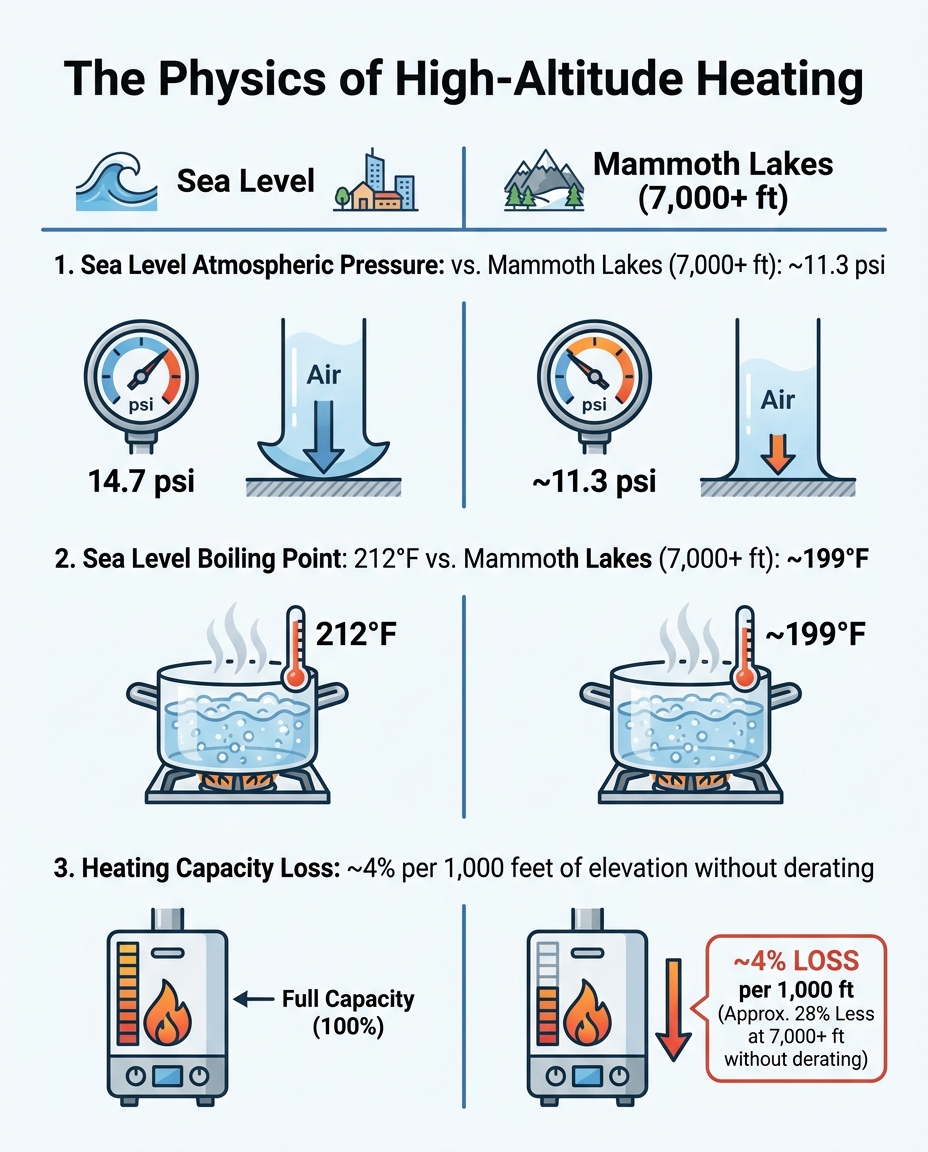
To understand why your heating system struggles in the mountains, you have to look at the physics of thin air. At sea level, the atmospheric pressure pushing down on the earth is about 14.7 pounds per square inch (psi). Up in Mammoth Lakes, that pressure drops significantly to roughly 11.3 psi. This drop in pressure means the air is less dense, and the oxygen molecules are spread much further apart.
When your boiler fires up, it draws in surrounding air to mix with natural gas or propane. Because the air is thinner, the system pulls in less actual oxygen per cubic foot. If the unit still has its factory sea-level calibration, the gas valve is injecting fuel based on sea-level oxygen density. This creates a severe imbalance. The system is suddenly starved for oxygen, leading to an overly "rich" fuel mixture. When gas appliances burn rich, they cannot combust the fuel entirely. This inefficient burning process produces excess soot, wastes expensive fuel, and forces the entire system to work much harder just to produce a baseline amount of heat. Addressing this imbalance requires professional boiler calibration and repair to ensure the system operates safely.
Why Oxygen Density Matters for Heating
The ratio of oxygen to natural gas or propane must be incredibly precise for clean, safe combustion. When this ratio is thrown off by high altitude, the consequences go beyond just a chilly living room.
• Fuel waste: Unburned gas is essentially money sent straight up the exhaust flue.
• Soot buildup: Incomplete combustion creates carbon soot, which coats the heat exchanger and acts as an insulator, further reducing efficiency.
• Safety hazards: A severely starved combustion process can increase the risk of carbon monoxide production, making proper calibration a critical safety requirement.
• Component strain: The system runs longer cycles trying to meet the thermostat's demand, wearing out moving parts prematurely.
The Physics of High-Altitude Heating
Why Water Boils Differently in Mammoth Lakes
The Problem: Most residential hydronic (water-based) heating systems rely on internal temperature controls called aquastats. At sea level, a technician might set an aquastat to heat the water to 200°F before shutting the burner off, knowing that water doesn't boil and turn to steam until 212°F. However, at 7,000+ feet of elevation, water boils at approximately 199°F. If your system is still using sea-level settings, it is literally trying to heat the water past its local boiling point.
The Cause: The lower atmospheric pressure in the mountains exerts less downward force on the water inside your pipes. With less pressure holding the water molecules together, it takes less heat energy for those molecules to break apart and turn into steam. When a boiler attempts to push water to 200°F in an environment where it boils at 199°F, the water turns to vapor prematurely inside the closed loop of your heating system.
The Solution: This fundamental change in pressure dynamics means your system requires precise, local calibration of its temperature and pressure controls. A technician must adjust the high-limit settings so the burner shuts off well before the water reaches that critical 199°F threshold. If you are experiencing strange banging noises or inconsistent heat, troubleshooting your HVAC system in Mammoth Lakes starts with checking these altitude-specific temperature limits to prevent vapor lock and internal pressure spikes.
The Danger of Short-Cycling During Early Fall Cold Snaps
When a boiler's pressure settings and temperature limits are completely mismatched to the local altitude, the most common operational failure is short-cycling. Short-cycling occurs when a heating system turns on, runs for only a minute or two, and then abruptly shuts off without ever completing a full heating cycle or warming the house. It then turns back on moments later, repeating this rapid on-and-off loop indefinitely.
Because water boils faster at high altitude, a system with a factory sea-level calibration will quickly overheat its internal sensors. The water flashes to steam prematurely, causing a rapid pressure spike. The boiler's internal safety limit switches detect this dangerous spike and instantly shut the burner down to prevent damage. Once the water cools slightly and the pressure drops, the thermostat demands heat again, and the cycle repeats. This constant starting and stopping causes immense wear and tear on the gas valve, the igniter, and the electronic controls, significantly reducing the lifespan of the entire unit.
Early fall cold snaps in the mountains can suddenly expose the flaws of an uncalibrated system. A typical pattern we see during the fall is a homeowner reaching out for general HVAC system repair after a recommendation from another local business. They often require prompt service because their newly installed system is rapidly turning on and off during the first chilly night of the year. The September pre-heating season is the critical window to address these calibration issues. Waiting until the deep freezes of December means risking a total system failure when you need your heat the most.
High-Altitude Derating: Adjusting the Air-Fuel Mixture
To combat combustion starvation and ensure a heating system operates safely in thin air, professionals use a process called "derating." According to Department of Energy guidelines, gas appliances generally lose about 4 percent of their heating capacity for every 1,000 feet above sea level. In Mammoth Lakes, sitting at over 7,000 feet, an unadjusted system loses nearly 30 percent of its intended capacity.
Derating is the highly technical process of reducing the amount of fuel entering the burner so that it matches the reduced amount of oxygen available in the thin mountain air. This restores the proper air-fuel ratio, allowing the system to burn cleanly and efficiently, even if its overall maximum output is slightly reduced. Working with Mammoth Lakes heating experts is crucial here. Deep local expertise in high-altitude HVAC system calibration for mountain-town weather extremes means local technicians understand these physics natively, whereas a generic out-of-town installer might simply leave the factory settings intact.
Important warning: Derating is never a do-it-yourself project. Altering air-fuel mixtures requires specialized high-altitude kits, digital combustion analyzers, and a licensed professional to ensure the unit operates safely without producing carbon monoxide.
The Professional Derating Process
When a licensed technician derates a heating system for high altitude, they follow a strict, mathematically precise procedure:
1. Calculating the BTU reduction: The technician calculates the exact British Thermal Unit (BTU) reduction required for 7,000+ feet of elevation based on the specific make and model of the equipment.
2. Replacing burner orifices: The factory-installed gas orifices are removed and replaced with smaller, high-altitude specific orifices that restrict the fuel flow to match the thinner air.
3. Recalibrating the gas valve: The manifold gas pressure is meticulously adjusted using a digital manometer to ensure a smooth, consistent flow of fuel.
4. Testing combustion efficiency: Finally, the technician uses a combustion analyzer to test the exhaust gases, verifying that the air-fuel ratio is perfect, the system is running efficiently, and no dangerous carbon monoxide is spilling into the home.
Expansion Tank Pressure and System Tuning
Another major component affected by high altitude is the expansion tank. In a hydronic heating system, water expands as it warms up. Because water cannot be compressed, that extra volume needs somewhere to go. The expansion tank is a small metal cylinder attached to the piping, divided in half by a rubber diaphragm. One side holds system water, and the other side holds pressurized air. As the water expands, it pushes against the diaphragm, compressing the air and keeping the overall system pressure stable.
At 7,000+ feet elevation, the baseline atmospheric pressure outside the tank is lower. If the air side of the expansion tank is pre-charged to a standard sea-level pressure, it will be too rigid for the high-altitude environment. The expanding water won't be able to push the diaphragm effectively. When the expansion tank fails to absorb the pressure, the system's safety relief valve will often start weeping water onto the floor to prevent the pipes from bursting.
A knowledgeable technician must assess and tune the entire hydronic system, bleeding excess air from the lines and adjusting the expansion tank's pre-charge to match the mountain environment. During a harsh winter, a local property owner needed extensive work across their boilers and heat pumps. Because the technicians provided knowledgeable, friendly service and natively understood high-altitude expansion tank tuning, the final result came in at a better value than expected, preventing costly water damage and securing reliable heat for the rest of the season.
Pre-Winter Preventative Maintenance Strategies
Preparing your heating system for a mountain winter requires more than just turning up the thermostat. The September pre-heating season is the ideal time to schedule a comprehensive tune-up. Preventative maintenance is the best way to ensure your high-altitude calibrations are holding steady and your equipment is prepared for months of heavy usage.
During a thorough pre-winter inspection, a professional technician will evaluate several critical areas:
• Gas pressure and manifold settings: Verifying that the derated air-fuel mixture remains perfectly balanced for the altitude.
• Ignition systems and flame sensors: Cleaning the components that actually light the fuel, ensuring they haven't been fouled by soot from previous inefficient cycles.
• Safety controls and aquastats: Testing the high-limit temperature sensors to ensure they are properly adjusted for the 199°F boiling point.
• Venting and exhaust: Inspecting the flue for blockages or excessive carbon buildup to guarantee safe exhaust routing.
• Expansion tank pressure: Checking the air charge to prevent weeping relief valves and pressure spikes.
Investing in a preventative maintenance plan extends the lifespan of your equipment and keeps your monthly energy bills as low as possible. Furthermore, properly calibrated and regularly maintained high-efficiency systems may be eligible for generic energy rebates or utility incentives, making professional upkeep a smart financial decision. Always verify current rebate programs with your local utility provider.
Secure Your Comfort Before the Deep Freeze
Living in the mountains requires adapting to a unique environment, and your home's heating equipment is no exception. Thin air and lower boiling points make a factory sea-level calibration a significant liability in Mammoth Lakes. If you leave your system unadjusted, you are virtually guaranteeing wasted fuel, constant short-cycling, and an increased risk of mid-winter breakdowns.
Professional high-altitude calibration is the only way to ensure your system operates efficiently, safely, and reliably. By addressing these physics-based challenges during the September pre-heating season, you can enjoy peace of mind knowing your equipment is tuned specifically for the air it breathes. Don't wait for the first major snowstorm to find out your system can't handle the altitude—explore professional calibration options today and secure your comfort for the harsh winter ahead.
Frequently Asked Questions
Do boilers need to be adjusted for high altitude? Yes, they absolutely must be adjusted for high-altitude operation. Because the air is thinner at higher elevations, there is less oxygen available for combustion. A technician must adjust the air-fuel mixture and the internal pressure settings so the system burns fuel cleanly and operates safely without overheating.
What happens to boiler pressure at high altitude? At high altitude, the baseline atmospheric pressure is lower, which alters how pressure behaves inside the closed loop of the system. The expansion tank's pre-charge must be recalibrated to handle the water's expansion correctly. If left at factory settings, the system may experience severe pressure spikes, causing the relief valve to leak water.
How does elevation affect water heating? Elevation directly affects the boiling point of water, lowering it from 212°F at sea level to roughly 199°F at 7,000 feet. If a heating system's temperature controls are not lowered to account for this change, the water can turn to steam prematurely inside the pipes. This leads to loud banging noises, vapor lock, and rapid short-cycling.
Why do gas appliances need high altitude kits? High altitude kits contain smaller gas orifices designed to restrict the flow of natural gas or propane into the burner. Because there is less oxygen in thin mountain air, you must reduce the amount of fuel to maintain the correct combustion ratio. Without this kit, the appliance will burn too "rich," creating soot and potential safety hazards.
Can I adjust my boiler's air-fuel mixture myself? No, adjusting an air-fuel mixture is strictly a job for a licensed professional. The process requires specialized digital combustion analyzers to measure exhaust gases and ensure no carbon monoxide is being produced. Attempting a DIY adjustment is extremely dangerous and will likely void your equipment's warranty.
When is the best time to calibrate my boiler in Mammoth Lakes? The best time for calibration is during the September pre-heating season, well before the first major cold snaps hit the region. Calibrating early ensures your system is perfectly tuned to handle the dropping temperatures efficiently. Waiting until winter arrives increases the risk of emergency breakdowns when you need heat the most.
Sed iaculis aenean sit sed risus arcu vitae integer elit.
5 min read
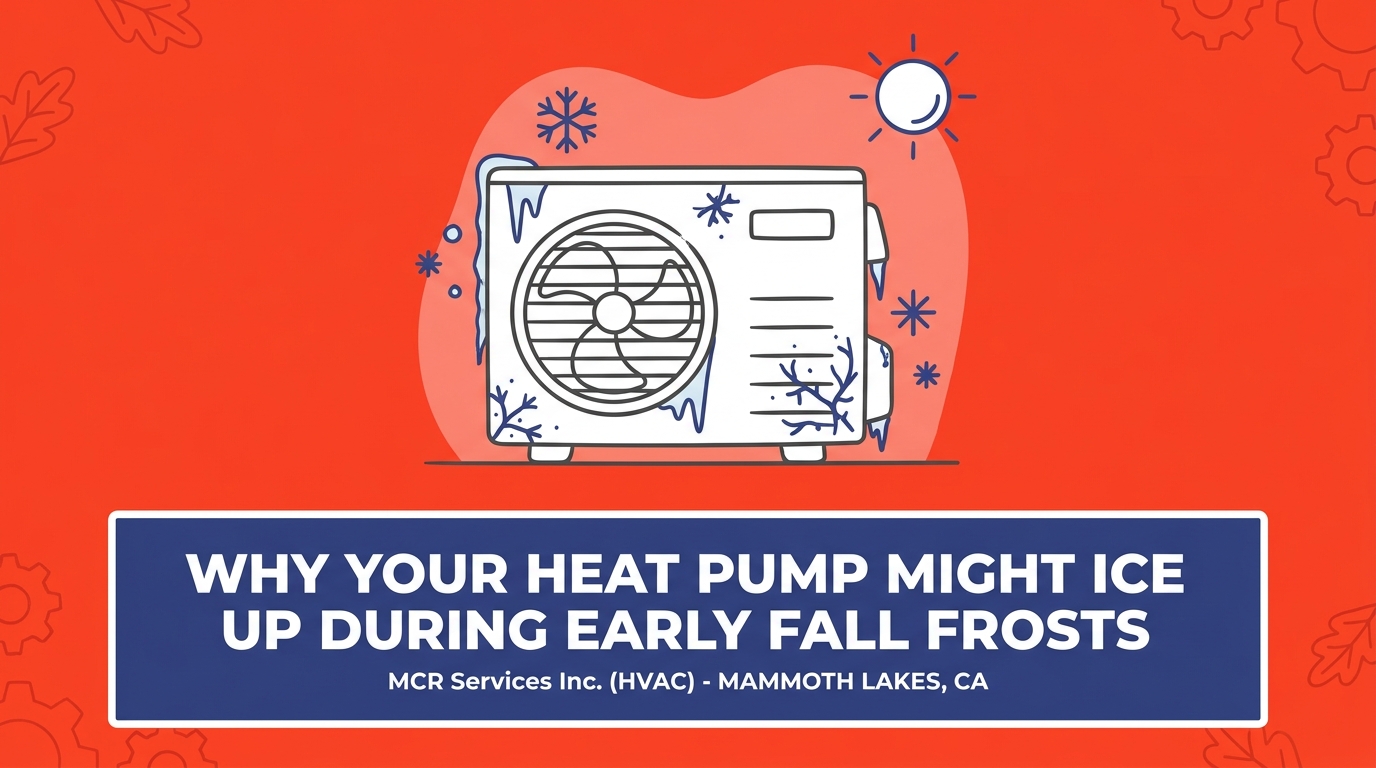
Why Your Heat Pump Might Ice Up During Early Fall Frosts
Finding frost on your outdoor unit in September often triggers panic about a major breakdown. Discover the difference between a normal seasonal defrost cycle and a true refrigerant leak.
The Mechanics of Carbon Monoxide Detection in Tightly Sealed Winter Cabins
Weatherproofing your cabin for winter traps heat, but it also traps dangerous combustion gases from aging furnaces. See why low-level monitors are essential for safety.
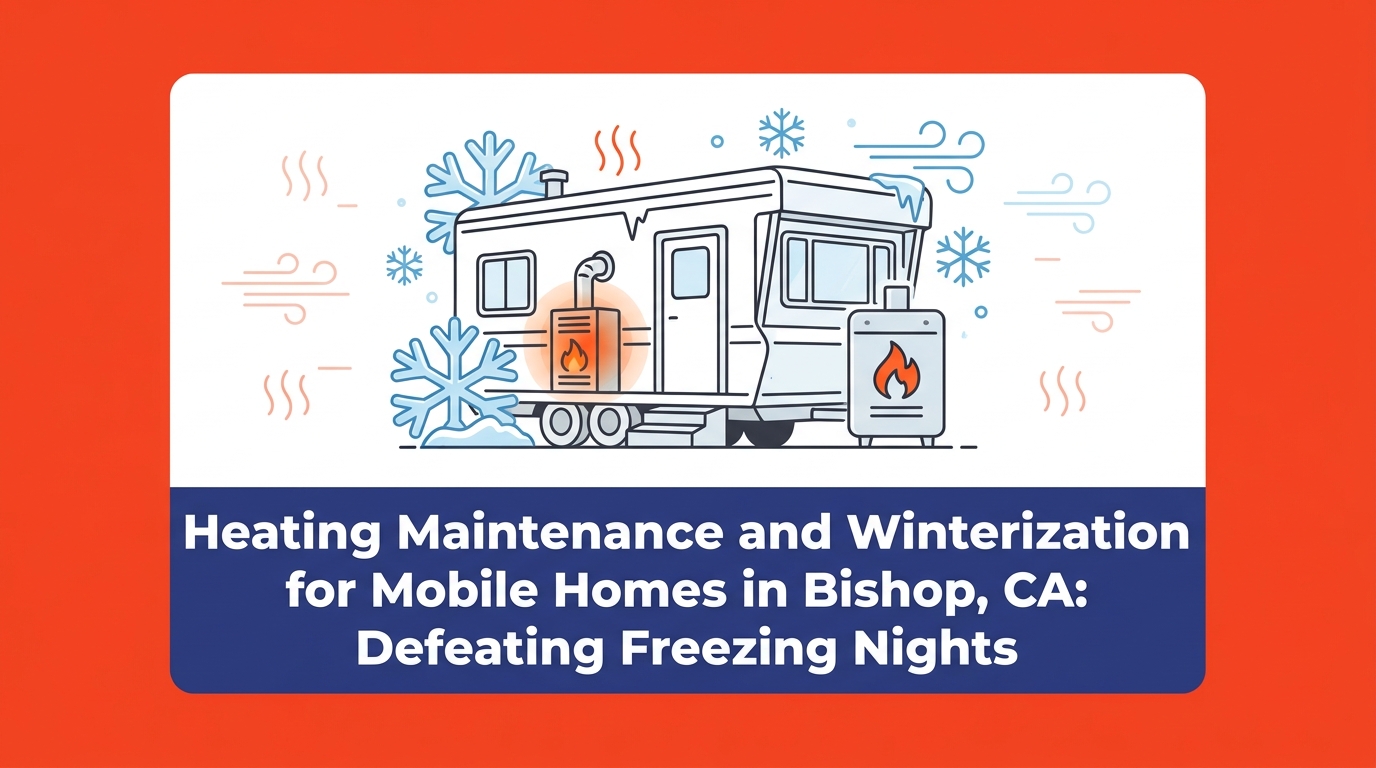
Winterizing Mobile Home HVAC Systems Against Bishop's Freezing Nights
Standard residential heating checklists ignore the exposed underbellies of manufactured housing. Protect your mobile home's ductwork before the first hard freeze hits the Eastern Sierra.