Gas Furnaces vs. Electric Boilers: Weighing Heating Costs in the Eastern Sierra
Gas Furnaces vs. Electric Boilers: Weighing Heating Costs in the Eastern Sierra
Are You Choosing the Right Heating Upgrade Before Winter?
Is your current heating system truly prepared for another severe Eastern Sierra winter? When you are evaluating Gas Furnaces vs. Electric Boilers: Weighing Heating Costs in the Eastern Sierra, you are facing a critical decision that goes far beyond simply picking a brand out of a catalog. September early fall pre-heating prep is the definitive window for homeowners in this region to assess their aging equipment and commit to a reliable upgrade before the heavy snow begins to fall.
For comprehensive support through this process, exploring professional Heating Services is the first step toward securing your home's winter comfort.
Many homeowners mistakenly assume that evaluating heating "costs" merely means looking at the retail price tag of a new unit. In a high-altitude climate, true costs are measured in long-term operational energy consumption, efficiency loss, and system reliability during deep freezes. The core dilemma usually comes down to choosing between the rapid ambient heating response of gas combustion and the consistent, zero-loss radiant delivery of an electric hydronic system. Making the right choice requires understanding how the extreme elevation of the Eastern Sierra fundamentally alters the physics of home heating.
The Physics of High-Altitude Heating Performance
Generic, sea-level heating advice simply does not apply to mountain homes. To understand why standard equipment performs differently here, we have to look at the physics of our environment. At an elevation of roughly 7,880 feet, the Mammoth Lakes high-altitude climate features significantly lower oxygen density than coastal or valley regions. This thin air drastically alters how HVAC systems function, particularly those that rely on burning fuel.
The Reality of Thin Air: Combustion requires three things: fuel, an ignition source, and oxygen. Because the air is thinner at elevation, there are fewer oxygen molecules available per cubic foot of air drawn into a furnace. This changes the air-to-fuel ratio, meaning standard factory settings will result in a rich burn—too much fuel and not enough oxygen. This leads to incomplete combustion, excessive soot buildup, and potential safety hazards.
The Concept of Derating: To combat this oxygen deprivation, combustion equipment must undergo a process called "derating." This involves modifying the system to reduce the amount of fuel introduced into the burner, ensuring a safe and clean burn. However, reducing the fuel also reduces the total heat output. Conversely, electrical resistance heating systems do not rely on oxygen or combustion, meaning they bypass this physical limitation entirely.
This is precisely why partnering with a local expert is critical. Out-of-town contractors frequently fail to properly size or modify equipment for this specific elevation, leaving homeowners with underperforming systems. Securing specialized Heating Services in Mammoth Lakes ensures your equipment is finely tuned for high-altitude physics, maximizing both efficiency and safety.
Gas Furnaces: Rapid Recovery vs. Altitude Derating
When temperatures plummet well below freezing, homeowners want their living spaces to warm up quickly. Forced-air gas systems are often favored for their ability to deliver rapid ambient temperature recovery. However, operating a gas furnace in the Eastern Sierra presents unique operational challenges that directly impact long-term energy consumption and efficiency.
Understanding High-Altitude Derating
The problem: A standard gas furnace designed to produce 100,000 BTUs of heat at sea level will not produce that same amount of heat in the mountains.
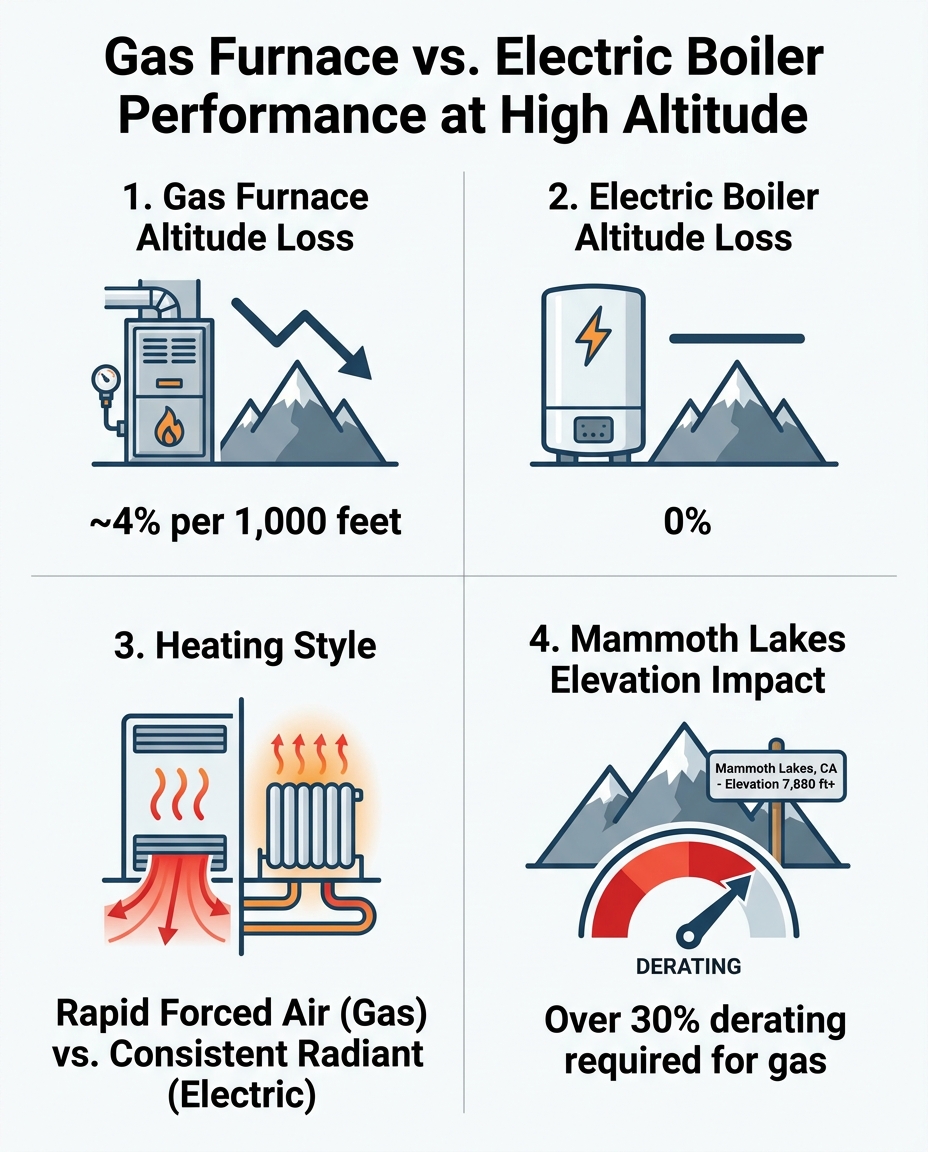
The cause: The lower oxygen density requires the system to be derated for safe operation. The standard mathematical rule of thumb is a capacity reduction of roughly 4% for every 1,000 feet above sea level.
The reality: In the Eastern Sierra, this means standard furnaces lose over 30% of their heating capacity simply due to the elevation. A 100,000 BTU furnace effectively operates closer to a 68,000 BTU unit once properly modified. This altitude-adjusted performance must be factored into your energy consumption expectations, as the system will need to run longer cycles to achieve the desired indoor temperature.
Speed and Airflow During Deep Freezes
Despite the capacity loss, gas furnaces remain popular because of how they distribute heat. By blowing warm air directly through the home's ductwork, they can quickly raise the ambient room temperature after you return from a long day out in the cold.
However, this rapid forced-air delivery comes with logistical challenges specific to our severe winters. Heavy Eastern Sierra snowfall can easily accumulate and bury external intake and exhaust vents. High-efficiency gas furnaces require clear venting to operate safely; if a snowbank blocks these pipes, the system's safety switches will shut the furnace down entirely, leaving you without heat until the vents are cleared. Furthermore, relying on propane or natural gas means you are dependent on fuel delivery schedules or municipal lines, which can sometimes be disrupted during severe winter storms.
Electric Boilers: Consistent Radiant Heat with Zero Altitude Loss
In contrast to combustion systems, electric hydronic setups offer a completely different approach to warming a mountain home. Rather than blowing heated air through ducts, electric boilers heat water that circulates through radiant floor tubing or baseboard radiators. This technology provides distinct advantages for high-elevation properties.
The 100% Efficiency Advantage
Electric boilers convert nearly 100% of their electrical energy directly into heat. Because they use electrical resistance elements rather than a combustion burner, they experience absolutely zero performance loss due to altitude or oxygen deprivation. A unit rated for a specific output will deliver that exact output, whether it is installed at sea level or at 8,000 feet.
We see the transformative power of modern electric systems across the region. For example, during a hot, humid summer in Bishop, one local homeowner struggled with an ineffective swamp cooler that simply could not keep up with the extreme heat. After a thorough assessment, technicians installed two modern electric mini splits. The transition from an outdated, struggling unit to highly efficient electric technology completely stabilized the home's comfort. That same principle of upgrading to efficient, zero-loss electric technology applies directly to winter heating with electric boilers. For a deeper dive into these mechanics, you can review How High Altitude Affects Boiler Efficiency.
Protecting Your Mountain Home's Plumbing
One of the most significant benefits of an electric boiler is the way it delivers warmth. Hydronic systems rely on thermal mass heating. Water holds heat exceptionally well, and as it circulates, it provides steady, even, radiant warmth that penetrates floors, walls, and furniture.
Why thermal mass matters:
• Pipe protection: Consistent radiant heat is a major defense against burst pipes. Because the heat radiates steadily through the structure rather than cycling on and off in bursts of blown air, the internal walls where plumbing is housed stay consistently warm.
• Even temperatures: Radiant heating eliminates the cold spots and drafts often associated with forced-air systems.
• Grid reliance vs. fuel delivery: While electric systems rely on the power grid, they eliminate the need for scheduling propane deliveries during massive snowstorms or digging out buried gas vents.
Side-by-Side Comparison: Gas vs. Electric at Elevation
To make the best decision for your home, it helps to view these two distinct technologies side-by-side. The following comparison highlights the operational metrics and energy consumption profiles of gas combustion vs electric hydronic systems in a high-altitude environment.
• Heating Speed — Forced-Air Gas Furnace: Rapid ambient air recovery; quickly warms cold rooms. — Electric Hydronic Boiler: Gradual, steady thermal mass heating; takes longer to warm up initially.
• Altitude Efficiency Loss — Forced-Air Gas Furnace: Over 30% capacity loss due to required derating. — Electric Hydronic Boiler: 0% capacity loss; operates exactly as rated.
• Energy Consumption Profile — Forced-Air Gas Furnace: Requires longer run cycles to compensate for derated BTU output. — Electric Hydronic Boiler: Nearly 100% energy conversion; highly stable consumption.
• Winter Maintenance — Forced-Air Gas Furnace: Requires diligent clearing of exterior snow from intake/exhaust vents. — Electric Hydronic Boiler: Minimal exterior maintenance; no external venting required.
• Lifespan Expectations — Forced-Air Gas Furnace: Subject to combustion wear and tear; typically 15-20 years. — Electric Hydronic Boiler: Fewer moving parts; often exceeds 20 years with proper care.
Gas Furnace vs. Electric Boiler Performance at High Altitude
Pre-Season Preparation: Why September is the Critical Window
The unpredictability of Eastern Sierra autumns means that September can quickly transition into severe winter weather without warning. Waiting until October or November to evaluate your heating system is a significant risk. Early fall is the final, reliable window for major HVAC upgrades before the first heavy snowfalls restrict exterior access.
Here is why scheduling your evaluation now is essential for a smooth winter:
1. Assessing Current Equipment Health: Before the system is stressed by sub-zero temperatures, a thorough inspection will reveal if your current unit is compromised. Securing Routine Heating Maintenance now prevents emergency breakdowns in January.
2. Evaluating Venting and Exterior Access: Installing new venting, running new lines, or placing heavy equipment is straightforward in September. Once the ground is frozen solid and snowbanks accumulate against the house, these logistical tasks become exponentially more difficult and time-consuming.
3. Avoiding the Emergency Rush: When the first deep freeze hits, local technicians are flooded with emergency "no-heat" calls. By acting proactively, you secure priority scheduling for your installation or upgrade.
4. Processing Energy Rebates: General energy rebates, utility incentive programs, or federal tax credits may apply to qualifying high-efficiency installations. These programs often require time to process and approve. Acting early ensures you have the paperwork sorted before the end of the calendar year. (Always verify current programs with your local utility provider or a tax professional).
Make an Informed Heating Decision for Your Mountain Home
Ultimately, the choice between gas and electric depends on prioritizing your specific comfort needs. If your primary goal is rapid recovery to quickly heat up a cold house after a weekend away, a properly derated gas furnace offers unmatched speed. However, if your priority is consistent, zero-loss radiant heat that protects your plumbing and provides steady thermal mass warmth, an electric hydronic system is structurally superior for high-altitude environments.
It is vital to factor in the physics of high altitude when assessing long-term energy consumption profiles. A system that looks perfect on paper at sea level will perform entirely differently in the mountains. We encourage you to speak with local experts who understand these regional nuances inside and out. To explore the steady, reliable warmth of hydronic technology before the snow flies, learn more about our Electric Boiler Systems and schedule your pre-season consultation today.
Frequently Asked Questions
How does high altitude affect gas furnace efficiency?
High altitude significantly reduces the oxygen available for combustion, requiring standard gas furnaces to be derated. This modification reduces the fuel input to ensure a safe burn, which consequently lowers the total heating capacity by roughly 4% per 1,000 feet of elevation. As a result, systems must run longer cycles to heat the home, altering their operational efficiency.
Which heating system recovers faster from deep freezes?
Forced-air gas furnaces generally recover ambient air temperatures much faster than hydronic systems. By blowing heated air directly into the living spaces, a gas furnace can quickly warm up a cold room. Radiant systems take longer to heat the physical mass of the floors and walls before the air temperature rises.
Is an electric boiler better for consistent mountain heating?
Yes, electric boilers excel at providing consistent, even warmth. Because they utilize thermal mass heating to circulate hot water through floors or baseboards, the heat radiates steadily throughout the home. This consistency eliminates cold spots and provides excellent protection against frozen pipes during prolonged deep freezes.
Do electric boilers lose efficiency at high elevation?
No, electric boilers do not lose heating capacity at high elevations. Because they rely on electrical resistance elements rather than a combustion process, they require zero oxygen to generate heat. They convert nearly 100% of their electrical energy into thermal energy, regardless of the altitude.
How do operational energy profiles compare between gas and electric in the Eastern Sierra?
Gas systems require altitude derating, which means they lose over 30% of their heating capacity in the Eastern Sierra and must run longer to meet thermostat demands. Electric systems experience zero capacity loss and maintain highly stable energy conversion rates. The right choice depends on balancing the need for rapid forced-air heating against the steady consistency of radiant electrical heat.
Why is early fall the best time to replace a heating system in Mammoth Lakes?
September provides the final reliable window for exterior access before heavy snow and frozen ground complicate installations. Replacing a system in early fall prevents the logistical nightmares of navigating deep snowbanks to install venting or heavy equipment. It also ensures your home is fully prepared before emergency deep freezes hit the region.
When you are carefully weighing Gas Furnaces vs. Electric Boilers: Weighing Heating Costs in the Eastern Sierra, taking proactive steps in September ensures you will enjoy a warm, safe, and highly efficient winter season.
Sed iaculis aenean sit sed risus arcu vitae integer elit.
5 min read
Navigating Heating Upgrades for Historic and Older Homes in Big Pine
Vintage properties shouldn't force you to choose between modern comfort and original architecture. Explore ductless heating alternatives that protect your home's charm before winter arrives.
Understanding the Role of MERV Ratings When Filtering Fall Wildfire Smoke
Buying a hospital-grade filter during heavy smoke events feels smart, but high-MERV filters can actually suffocate your furnace blower. Learn how to balance indoor air quality and equipment safety.
Gas Furnaces vs. Electric Boilers: Weighing Heating Costs in the Eastern Sierra
Assess your heating options before the snow falls. See how the rapid response of a gas furnace compares to the steady warmth of an electric boiler to maximize your home's winter efficiency.