The Impact of Pine Needle Buildup on Outdoor AC Condensers in Mammoth Lakes
The Impact of Pine Needle Buildup on Outdoor AC Condensers in Mammoth Lakes
Autumn in the Sierras: When Falling Needles Become a Mechanical Threat
With September in the high country only weeks away, understanding the impact of pine needle buildup on outdoor AC condensers in Mammoth Lakes is critical as local trees begin their massive seasonal shedding. While the changing seasons create a stunning backdrop across our wooded residential areas, they also introduce a severe mechanical threat to your home comfort systems. The heavy accumulation of organic debris choking your outdoor cooling equipment is a concrete problem that requires immediate attention. Taking action now prevents a minor airflow issue from turning into a catastrophic mechanical failure under the winter snowpack.
For comprehensive air conditioning services, securing professional AC maintenance in Mammoth Lakes is the most effective way to clear this debris safely and set your system up for a secure hibernation. At MCR Services Inc., our team has spent years rescuing alpine HVAC systems from this exact type of organic suffocation, and we know firsthand how quickly a neglected unit can fail.
How Dense Forest Debris Restricts Essential Airflow
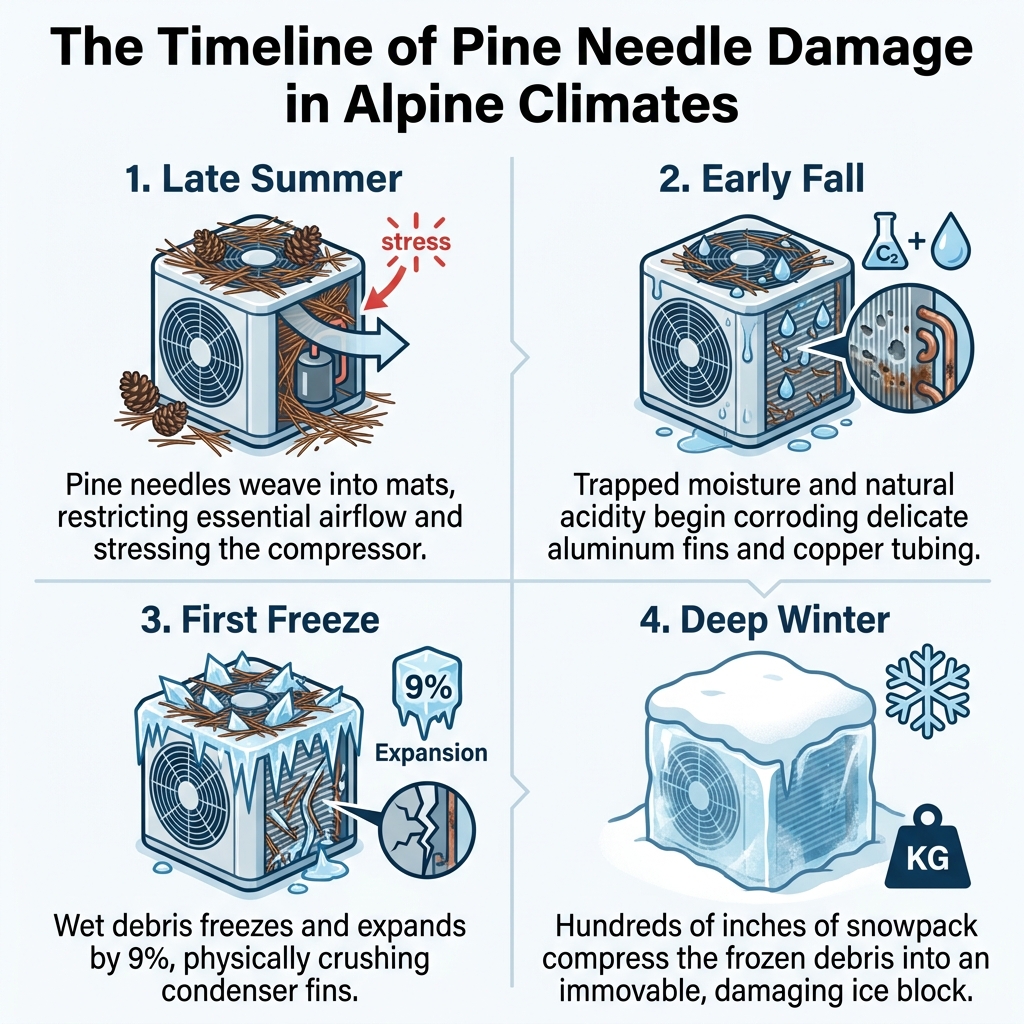
Pine needles are uniquely designed by nature to be an absolute nuisance to HVAC equipment. Unlike large, broad oak or maple leaves that often rest on top of the fan grille, pine needles are slender and aerodynamic. They easily slip through the protective exterior grates of your outdoor unit. Once inside, they do not simply sit at the bottom of the casing. The combination of wind, moisture, and the powerful suction of the condenser fan causes these needles to weave together into dense, impenetrable mats against the delicate aluminum fins.
When this debris blocks the intake, your system experiences a severe restriction in essential airflow. The compressor relies on a steady, unobstructed volume of air pulling through the coils to release the heat absorbed from inside your home. When that airflow is choked off by a blanket of forest debris, the system must work twice as hard to achieve the same cooling results during those final warm days of the season. HVAC manufacturers generally require at least two feet of strict clearance around the exterior of the unit, along with a completely debris-free interior, to ensure the equipment operates safely.
Recognizing Early Warning Signs
Most homeowners do not realize that their system is suffocating until the late summer cooling cycles become noticeably less effective. Catching the buildup early can save your equipment from unnecessary strain. A pattern we see often in our local service calls includes these key indicators:
• Visible accumulation: A heavy ring of brown needles gathering around the concrete pad or base of the unit.
• Extended cooling cycles: The system runs continuously without reaching the set temperature on the thermostat.
• Unusual compressor noises: A louder-than-normal humming or straining sound coming from the outdoor cabinet.
• Warm air from vents: The indoor registers blow lukewarm air because the outdoor unit cannot properly expel heat.
The Impact on Compressor Lifespan
Ignoring minor debris buildup carries a heavy long-term mechanical cost. When airflow is restricted, the compressor runs hotter than its engineered design limits. Chronic overheating degrades the internal electrical windings and breaks down the lubricating oils inside the compressor shell. Over time, this constant thermal stress weakens the heart of your cooling system, significantly shortening its functional lifespan and increasing the likelihood of a total breakdown just when you need the system most.
The Hidden Chemical Danger: Moisture and Acidity
While the immediate airflow restriction is a problem in late summer, a more insidious threat develops silently as fall progresses. Pine needles are highly acidic, and as they begin their biological breakdown process inside your condenser casing, they create a highly corrosive micro-environment. Furthermore, a thick mat of organic debris acts like a sponge, retaining moisture from morning dew, rain, and early frosts. This combination of trapped water and natural acidity is a chemical hazard for the sensitive metals inside your air conditioning system.
This decay process does not pause just because you have turned the thermostat off for the season. Throughout the autumn months in Mammoth Lakes wooded residential areas, the wet, acidic blanket resting against your coils continues to eat away at the equipment, silently compromising the structural integrity of the unit.
Why Copper and Aluminum are Vulnerable
Your outdoor condenser relies on copper tubing to transport refrigerant and ultra-thin aluminum fins to facilitate heat transfer. Neither of these metals is designed to withstand prolonged exposure to acidic organic matter. As the pine needles decompose, they release organic acids that strip away the protective oxidation layers on the aluminum. This leads to galvanic corrosion, a process where the metals begin to pit and degrade. Over time, this pitting deepens until it breaches the copper lines, resulting in microscopic refrigerant leaks that are incredibly difficult to locate and repair.
The Role of Trapped Moisture
Under normal conditions, a condenser unit is designed to get wet and dry out quickly. The fan and the open design allow ambient air to evaporate rain and condensation. However, a thick layer of pine needles prevents the interior of the unit from drying out. The debris blocks sunlight and natural breezes, trapping moisture directly against the coils for weeks or months at a time. This constant dampness accelerates the rusting of steel components and the corrosion of the non-ferrous metals, creating a permanent environment for decay.
• Wet Pine Needles — Moisture Retention: Extremely High — Corrosion Risk: Severe (Highly Acidic) — Long-Term Impact on Coils: Pitting, micro-leaks, metal degradation
The Freeze-Thaw Cycle: Expanding Ice Inside Your Condenser
The transition from autumn to winter introduces a completely different mechanical threat. When wet pine needles are trapped tightly between the delicate aluminum fins of your outdoor unit, they hold water in place. As temperatures plummet during the September pre-snowpack transition, this trapped water freezes. The physics of freezing water are unforgiving—water expands by approximately 9% when it turns to ice. This expansion exerts tremendous physical pressure on anything containing it.
When this happens inside your condenser, the expanding ice acts like tiny wedges driven between the aluminum fins. The fins are engineered to be paper-thin for maximum heat transfer, making them incredibly fragile. The expanding ice bends, crushes, and flattens these fins against each other. Because this damage occurs silently in the dead of winter, most homeowners have no idea it has happened until they attempt to turn on their cooling system the following summer. Our technicians at MCR Services Inc. see this pattern every spring, often finding that clients need extensive AC repair to restore functionality that could have been preserved with proper fall maintenance.
The Physics of Ice Expansion
Mountain environments are notorious for wild temperature swings during the fall. A warm afternoon can easily melt early snow or frost, soaking the pine needles inside your unit. When the sun drops behind the peaks, the temperature plummets below freezing, turning that moisture into solid ice. This repeated freeze-thaw cycle creates a compounding mechanical stress. Every time the water thaws, it seeps deeper into the crevices of the coils; every time it freezes, it expands further, pushing the delicate metal components past their breaking point.
Irreversible Fin Damage
Crushed condenser fins are not a cosmetic issue; they are a severe operational failure. When the fins are flattened, air can no longer pass through them. This permanently impacts the unit's ability to transfer heat. While minor bends can sometimes be carefully combed straight by a professional, extensive crushing caused by expanding ice is often irreversible. The difficulty and expense of attempting to repair widespread fin damage usually mean the homeowner faces a significant restoration bill or premature system replacement.
The Urgency of the September Prep Window
Timing is everything when managing property in an alpine environment. September is the critical transition month for pre-heating-season preparation. At an elevation of 7,880 feet, the climate does not offer the luxury of a long, lingering autumn. Early, unexpected freezes are a historical reality, and waiting until late October or November to clear your outdoor unit is simply too late. By the time Halloween arrives, the heavy winter snowpack may have already set in, locking the debris inside the machine until spring.
Homeowners must align their yard cleanup and HVAC maintenance strictly with this September pre-snowpack transition. Lower-elevation areas can afford to delay fall maintenance, but high-altitude living requires proactive discipline. Getting the equipment cleared out before the first freeze is the only reliable way to ensure the system survives the winter intact. For a broader look at seasonal transitions, reviewing a Spring AC Tune-Up Checklist for Mammoth Lakes can help you understand how fall preparation directly impacts your system's performance the following year.
Tracking the First Freeze
The historical unpredictability of alpine autumn temperatures means you cannot rely on a 10-day weather forecast to schedule your maintenance. A sudden cold front can drop overnight temperatures into the twenties without warning. Proactive scheduling always beats reacting to the weather. By treating September as a hard deadline for winterization, you remove the guesswork and protect your investment before the frost sets in.
Aligning Maintenance with Seasonal Shifts
Integrating your cooling system winterization into your broader fall property preparation ensures nothing gets overlooked. Just as you drain outdoor hoses, clear gutters, and prepare your heating system for the long winter, the outdoor cooling equipment requires its own specific shutdown protocol. Removing the organic debris, inspecting the coils, and ensuring the internal casing is bone-dry sets the system up for a safe, damage-free hibernation.
The Timeline of Pine Needle Damage in Alpine Climates
The Compounding Weight of Alpine Snowpack
The sheer volume and weight of annual snowfall in the region change the entire dynamic of HVAC maintenance. What begins as a minor summer airflow issue rapidly transitions into a severe winter hazard caused specifically by hundreds of inches of heavy local snowpack. When feet of snow pile on top of the outdoor unit, the immense downward pressure compresses everything inside the casing.
This snow load forces the trapped, wet pine needles deeper into the mechanical components, packing them tightly against the coils. As the winter progresses, this compressed mass freezes solid, creating the 'ice block' effect. Once this block forms, mid-winter remediation becomes virtually impossible without causing further damage to the unit. The only defense against this compounding threat is to ensure the interior of the casing is completely empty before the snow begins to fly during the September pre-snowpack transition.
Snow Load Compression
Snow is incredibly heavy, particularly the dense, wet snow often seen during early season storms. The physical weight of accumulated snow on outdoor equipment exerts hundreds of pounds of pressure on the top grille. While the metal casing is designed to support a reasonable snow load, the internal components are not designed to handle the pressure of compressed organic debris being forced against them. This compression drives the acidic needles into the smallest gaps of the condenser coil, maximizing the area of chemical and physical damage.
Preventing the 'Ice Block' Effect
A clean interior allows snow to behave differently inside the casing. If snow blows into an empty condenser unit, it generally rests harmlessly at the bottom and eventually melts away through the drainage holes. However, when pine needles are present, they act as an organic binding agent. They absorb the melting snow, hold the moisture, and refreeze into a solid, immovable block of dirty ice that encases the internal wiring and delicate fins. Removing the needles removes the binding agent, preventing the ice block from ever forming.
Why Professional Winterization Outperforms Basic Yard Cleanup
Raking the area around your concrete pad and brushing off the exterior grates are excellent first steps, but basic exterior cleanup is entirely insufficient for debris that has already bypassed the grille. Many homeowners attempt to remove the outer casing themselves to reach the trapped needles, but DIY disassembly is highly risky. Opening the cabinet exposes you to high-voltage capacitors that hold a lethal electrical charge even when the power is disconnected. Furthermore, improper handling can easily void your manufacturer warranty or result in accidental damage to the pressurized refrigerant lines.
This is where relying on deep local expertise regarding high-altitude climate challenges makes a massive difference. Our team at MCR Services Inc. understands the specific winterization requirements for HVAC systems in Mammoth Lakes wooded residential areas. When you schedule an AC tune-up, our technicians safely open the unit, use specialized equipment to clear the interior without bending the fins, and inspect the copper lines for early signs of acidic corrosion. This precise, specialized care guarantees your system is genuinely prepared for the extreme conditions ahead.
Manufacturer Clearance Requirements
Strict guidelines set by major brands dictate how a system must be maintained to keep the warranty active. Manufacturers require the interior of the condenser to be completely free of organic debris. Professional winterization ensures compliance with these strict rules. Technicians document the cleaning and inspection, providing you with the proof required to uphold your warranty if a mechanical failure occurs down the road.
Safe Debris Removal Practices
Clearing a densely packed mat of pine needles from fragile aluminum fins requires specialized tools. High-pressure washing or using a standard shop vacuum with a rigid plastic nozzle can instantly bend and crush the fins, causing the exact damage you are trying to avoid. Professionals utilize specialized fin combs, gentle non-acidic coil cleaners, and soft-bristle attachments to safely extract the debris, ensuring the unit is left pristine and structurally sound.
Frequently Asked Questions About Fall AC Protection
What happens if pine needles get in my air conditioner? When pine needles enter your air conditioner, they weave together into a dense mat that blocks essential airflow. This restriction forces the compressor to work much harder, leading to overheating, longer cooling cycles, and a significant reduction in energy efficiency. Over time, the acidic nature of the needles can also begin to corrode the internal metal components.
Does debris inside an AC unit cause damage in winter? Yes, debris left inside the unit during winter causes severe mechanical damage. The organic matter traps moisture, which freezes and expands when temperatures drop. This expanding ice physically bends and crushes the delicate aluminum condenser fins, permanently reducing the system's ability to transfer heat when summer returns.
Should I remove pine needles from my AC before winter? You absolutely must remove pine needles from the unit before the winter snowpack arrives. Leaving them inside allows the heavy snow to compress the wet debris into a solid block of ice against the coils. Clearing the unit in early fall prevents this compounding damage and protects the structural integrity of the equipment.
Should I cover my AC unit in the winter in Mammoth Lakes? Covering an AC unit is a highly debated topic, but in heavy snowpack areas, a specialized, breathable top cover can prevent snow and debris from entering the fan grille. However, you should never wrap the entire unit tightly in a plastic tarp, as this traps ground moisture inside the casing, accelerating rust and inviting rodents to nest in the wiring.
Can I use a hose to wash pine needles out of my condenser? Using a standard garden hose on the exterior of the unit is generally safe for light dust, but it is highly ineffective for removing thick mats of pine needles trapped inside. Spraying water directly into a clogged unit often pushes the debris deeper into the delicate fins, making the problem worse. It is always safer to have a professional open the casing and remove the debris manually.
Secure Your System's Safety Before the First Snow Flies
Clearing pine needles out of your outdoor cooling equipment is far more than a simple airflow concern; it is a critical defense against devastating winter damage. The narrow September pre-snowpack transition window is your only opportunity to remove this acidic, moisture-trapping debris before the heavy alpine snow compresses it into an expanding block of ice. Do not wait for the freezing weather to dictate your maintenance schedule. Take proactive steps today to secure professional winterization, ensuring your system survives the extreme winter safely and is ready to perform flawlessly when the warm weather returns.
Sed iaculis aenean sit sed risus arcu vitae integer elit.
5 min read
Navigating Heating Upgrades for Historic and Older Homes in Big Pine
Vintage properties shouldn't force you to choose between modern comfort and original architecture. Explore ductless heating alternatives that protect your home's charm before winter arrives.
Understanding the Role of MERV Ratings When Filtering Fall Wildfire Smoke
Buying a hospital-grade filter during heavy smoke events feels smart, but high-MERV filters can actually suffocate your furnace blower. Learn how to balance indoor air quality and equipment safety.
Gas Furnaces vs. Electric Boilers: Weighing Heating Costs in the Eastern Sierra
Assess your heating options before the snow falls. See how the rapid response of a gas furnace compares to the steady warmth of an electric boiler to maximize your home's winter efficiency.