Navigating Heating Upgrades for Historic and Older Homes in Big Pine
Navigating Heating Upgrades for Historic and Older Homes in Big Pine
The Structural Challenge of Heating Vintage Properties
At MCR Services Inc., we know that if your vintage property is freezing in the winter, navigating heating upgrades for historic and older homes in Big Pine can feel like an impossible choice between modern comfort and preserving the architectural details you love. You know your current system is struggling to keep up with the dropping temperatures, but the thought of tearing into original walls just to run bulky metal tubes is enough to make anyone hesitate. The good news is that you do not have to destroy your home's unique character to stay warm this winter.
If you are ready to explore low-impact options, our comprehensive heating services provide the perfect starting point to modernize your comfort without sacrificing your home's aesthetic.
When our team assesses older Big Pine properties, we are always struck by the distinct architectural beauty that reflects the rich history of the Eastern Sierra. From custom woodwork to solid masonry, these houses were built to last. However, they were constructed long before modern central air conditioning and forced-air heating became the standard. As a result, these vintage homes completely lack the structural cavity space—specifically the wide plenums, deep wall chases, and hollow floor joists—required to conceal traditional, bulky ductwork.
The primary dilemma: Homeowners are forced to make a difficult decision. Do you proceed with invasive structural tear-outs that permanently alter the footprint of your rooms, or do you freeze through another winter? Fortunately, the HVAC industry has evolved. Today, our technicians can install low-impact, high-efficiency alternatives that deliver precise temperature control without requiring a demolition crew.
To understand why a specialized approach is necessary, it helps to look at exactly how different heating methods impact the skeleton of a historic house:
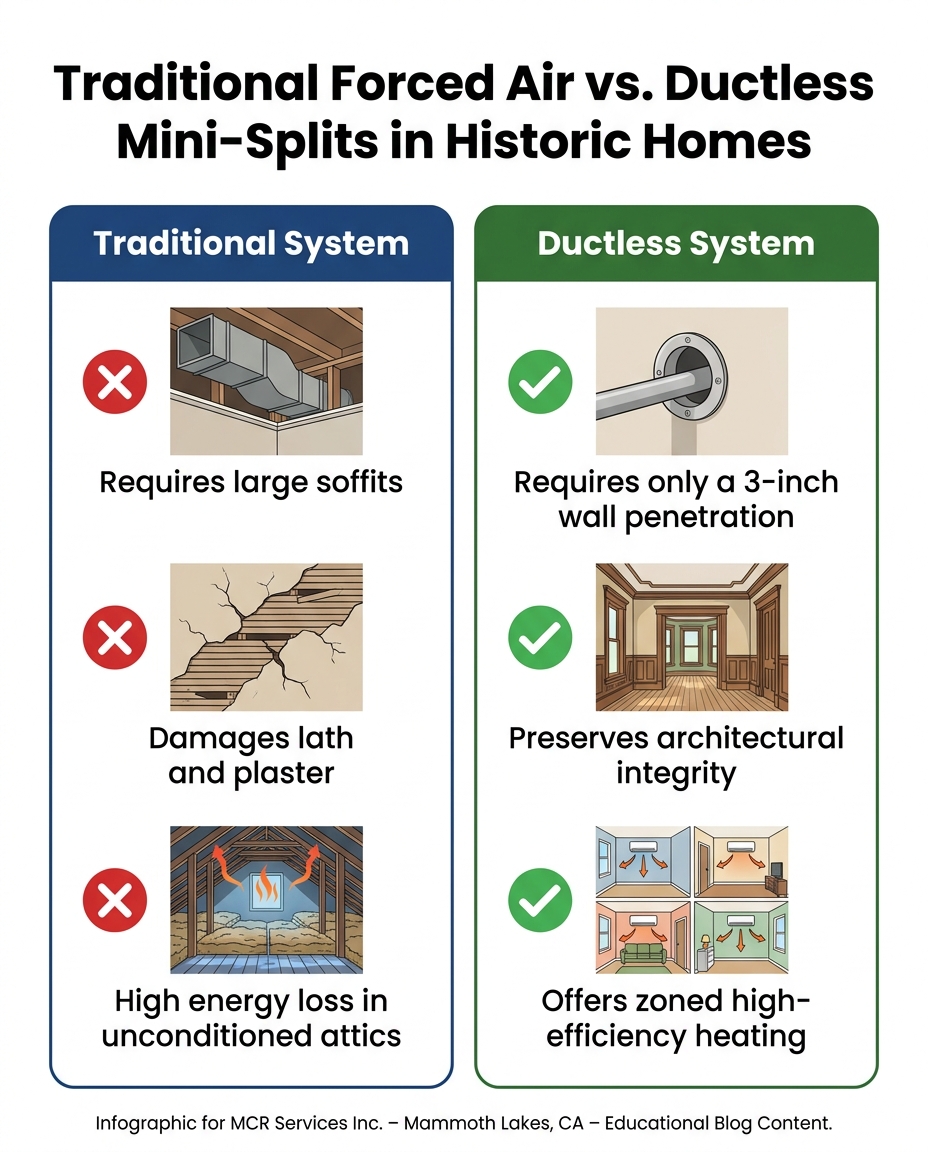
• Traditional Central Forced-Air — Structural Impact: High. Requires cutting large holes in floors, walls, and ceilings for 6-inch to 12-inch metal ducts. — Aesthetic Alteration: Severe. Often necessitates dropped ceilings, bulky soffits, and boxed-in corners to hide the ductwork.
• Ductless Mini-Splits — Structural Impact: Very Low. Requires only a small 3-inch hole through an exterior wall to connect indoor and outdoor units. — Aesthetic Alteration: Minimal. Indoor air handlers mount directly to the wall, floor, or ceiling without altering the room's dimensions.
• High-Velocity HVAC — Structural Impact: Low. Uses flexible 2-inch mini-ducts that snake through existing wall cavities and closets. — Aesthetic Alteration: Low. Small, circular vents blend into ceilings or floors, preserving original moldings and trim.
Modernizing your home's comfort does not have to mean sacrificing its historical charm. By understanding the specific limitations of your vintage property, we can help you select a heating solution that works in harmony with its original design.
Why Traditional Ductwork Struggles in Historic Architecture
Attempting to force a standard central heating system into a home that was never designed for one usually ends in frustration, inflated costs, and permanent cosmetic damage. In our experience working on early 20th-century builds across the Eastern Sierra, conventional retrofits are incredibly difficult. When contractors try to shoehorn large sheet metal ducts into these tight spaces, the house itself often suffers.
One of the most significant issues involves how the walls were originally constructed. Before modern drywall became the standard building material, homes were finished using a labor-intensive method that does not respond well to heavy power tools or structural vibration.
The Vulnerability of Lath and Plaster
In most vintage homes, the interior walls are made of lath and plaster. This historical construction method involves nailing hundreds of thin, horizontal wooden strips (the lath) across the wall studs. Builders then slathered wet plaster over the wood. As the plaster squeezed through the gaps between the strips, it formed "keys" on the backside that held the entire wall together once it dried.
The problem with retrofits: Our technicians have seen firsthand how incredibly rigid and highly susceptible to cracking, crumbling, and collapsing lath and plaster can be when disturbed. Cutting a large 10-inch hole for a standard air return vent often breaks the plaster keys behind the wall. Once those keys snap, large sections of the wall can detach and fall away. Repairing damaged lath and plaster is a lost art, requiring specialized tradespeople and significant expense. This vulnerability is a primary reason why our team strongly recommends a ductless mini-split installation for older homes—it avoids the need for massive wall penetrations entirely.
Beyond the walls, traditional ductwork often ruins a home's original aesthetic. Because older properties lack hollow chases, contractors are forced to route ducts directly through the living space. This results in dropped ceilings that cover up original crown molding, or awkwardly boxed-in corners that shrink the square footage of a room.
Furthermore, running traditional ductwork through unconditioned spaces—like the drafty attics or uninsulated crawlspaces common in older builds—leads to severe energy inefficiency. As the heated air travels through freezing metal ducts in an uninsulated attic, it loses a massive amount of thermal energy before it ever reaches your living room. You end up paying higher utility bills while your heating system works overtime just to compensate for the thermal loss.
Low-Impact Alternatives: Ductless and High-Velocity Systems
If traditional forced air is out of the question, how do we efficiently heat these older homes? The answer our team relies on lies in modern technologies designed specifically to bypass the need for large-scale ductwork. These low-impact alternatives provide superior comfort and energy efficiency without requiring you to tear your house apart.
Ductless Mini-Split Systems: A ductless system is exactly what it sounds like—a heat pump that operates without any ductwork at all. It consists of an outdoor compressor connected to one or more indoor air handlers. The connection between the two units requires only a small, 3-inch hole drilled through the exterior wall. This tiny penetration accommodates the refrigerant line, power cable, and condensate drain, completely preserving the structural and aesthetic integrity of the room.
One of the greatest advantages we highlight with a ductless setup is zoned comfort. Because each room (or zone) has its own air handler, you can heat specific areas of the house independently. You no longer have to waste energy heating an empty guest bedroom just to keep the main living area warm. If you are weighing your options, comparing central heating to zoned mini-splits often reveals that zoned systems provide much better temperature control in drafty, multi-story historic homes.
High-Velocity HVAC Systems: If you strongly prefer a centralized system that remains entirely hidden, high-velocity HVAC is another excellent alternative we install. Instead of using large, 8-inch metal ducts, these systems use flexible, 2-inch insulated tubes. These mini-ducts can easily snake through existing wall cavities, behind floorboards, and inside the back of closets without requiring any structural demolition. The conditioned air is delivered into the room through small, discreet circular vents that can be painted or stained to match original wood trim.
Both of these modern systems provide superior efficiency compared to outdated, energy-hogging boilers, baseboard heaters, or the swamp coolers many older homes rely on during the warmer months.
Cold-Climate Heat Pump Technology
For decades, heat pumps had a reputation for struggling when the temperature dropped below freezing. That is no longer the case. Modern cold-climate heat pumps utilize advanced inverter-driven compressors that can extract ambient heat from the outside air even when temperatures plummet well below zero.
A recent winter project our team completed in the area highlights this shift. A property required comprehensive upgrades for older, failing boilers and outdated heat pumps. By utilizing modern, cold-weather-rated equipment, our technicians provided high-quality work that modernized the entire setup without unnecessary demolition. The new system easily handled the freezing temperatures, delivering better-than-expected value and consistent warmth throughout the winter.
Traditional Forced Air vs. Ductless Mini-Splits in Historic Homes
Addressing Electrical Panel Limitations in Older Homes
While low-impact heating systems solve the structural challenges of a vintage home, during our initial inspections we often uncover a completely different hurdle: the electrical system. This is a critical, frequently overlooked content gap when planning a historic home renovation. Modernizing your heating usually means transitioning from fossil fuels (like an old oil boiler or gas furnace) to high-efficiency electric systems. Your home's electrical panel must be able to handle that increased load safely.
A pattern we see often is that many older homes still operate on their original 60-amp or 100-amp electrical service panels. Decades ago, this was plenty of power to run a few lights, a refrigerator, and a radio. Today, it is entirely inadequate.
Signs your older home needs an electrical upgrade:
• Frequent breaker trips: If running a microwave and a space heater trips the breaker, your panel is already maxed out.
• Flickering lights: Lights that dim when a large appliance turns on indicate a lack of available amperage.
• Outdated components: Homes that still rely on screw-in glass fuses or have original knob-and-tube wiring cannot safely support modern HVAC equipment.
Transitioning to high-efficiency electric heating systems often requires a panel upgrade—typically to a 200-amp service—to handle the dedicated circuits a new heat pump requires. Before selecting any new equipment, our team always performs a professional load calculation. A proper load calculation evaluates your home's total electrical capacity and determines exactly how much power your new heating system will draw.
If you are planning heat pump upgrades, you should also look into available financial incentives. Federal tax credits and local energy rebates frequently apply to qualifying electrical panel upgrades when they are performed in conjunction with a high-efficiency heat pump installation. While specific programs and availability vary, checking with your utility provider or a tax professional can help offset the initial investment of bringing your vintage home's electrical system up to modern code.
Preserving Architectural Integrity During Installation
Choosing the right equipment is only half the battle; the execution of the installation matters just as much. When our crews work with older properties, we treat the installation process with a high level of respect for the home's history. Specialized installation techniques are required to protect the property's historic charm both inside and out.
One of the primary concerns homeowners have with ductless systems is the visual impact of the exterior line sets (the insulated copper pipes that connect the indoor and outdoor units). If installed carelessly, these lines can look like industrial clutter strapped to the side of a beautiful Victorian or Craftsman exterior.
Aesthetic placement strategies we utilize include:
• Concealed routing: Running line sets behind existing architectural features, such as tucking them tightly against chimney breasts or under eaves.
• Custom line hide covers: Using paintable, low-profile covers that encase the refrigerant lines, allowing them to blend seamlessly into the exterior siding or stucco.
• Strategic outdoor unit placement: Locating the outdoor compressor behind landscaping, fencing, or at the rear of the property so it is not visible from the street.
Inside the home, the placement of the indoor air handlers requires equal care. While the standard high-wall mounted unit is the most common, it is not the only option. To blend with vintage room layouts, our technicians can install low-profile floor consoles that mimic the look of traditional radiators, or ceiling cassettes that sit flush with the plaster, keeping the walls completely clear for artwork and antique furniture.
At MCR Services Inc., we offer specialized local expertise in retrofitting Eastern Sierra historic homes, providing ductless and low-impact heating solutions that preserve architectural integrity without sacrificing winter comfort. By prioritizing preservation alongside performance, you ensure your home retains its value and character. Working with our team, who provides dedicated HVAC services in Big Pine, means you are partnering with professionals who understand the unique building materials and structural quirks of local vintage properties.
The Critical Window: Preparing Before the Freeze
When you own an older home, timing your upgrades is a vital part of the planning process. As we head into September, we always remind our customers that the early fall pre-heating season represents the absolute ideal window for retrofitting heating systems. Waiting until the temperatures drop makes structural or electrical upgrades significantly more stressful, difficult, and uncomfortable for your family.
Big Pine and the surrounding Eastern Sierra region experience freezing winter temperatures, making robust, cold-weather-rated heating solutions critical for older homes. Vintage properties typically have much lower baseline insulation than modern builds—often featuring single-pane windows, uninsulated wall cavities, and drafty floorboards. Once the first freeze hits, a failing heating system will leave the house dangerously cold very quickly.
A recent local project perfectly illustrates the importance of timing. A homeowner contacted us for general HVAC system installation and repair as the weather just began to turn in the early fall. Because they reached out early, our technicians provided prompt and knowledgeable service, securing the necessary equipment and completing the installation well before the freezing temperatures arrived. The property was fully equipped and comfortably warm by the time the first snow fell.
Why early fall is the critical window:
• Electrical coordination: If your home requires an electrical panel upgrade, coordinating with the utility company takes time. Doing this in September avoids winter delays.
• Material pliability: Sealants, caulking, and exterior paint (for line hide covers) cure properly in mild fall weather, whereas freezing temperatures can compromise these materials.
• Immediate comfort: Securing a prompt assessment and installation ensures your system is fully operational, tested, and ready to perform the moment you actually need it.
Frequently Asked Questions About Retrofitting Older Homes
How do you heat an old house without ductwork?
We find the most effective way to heat an old house without ductwork is by installing a ductless mini-split heat pump system. These systems use individual indoor air handlers connected to an outdoor compressor via a small, 3-inch refrigerant line, completely bypassing the need for bulky metal ducts. Alternatively, high-velocity HVAC systems use flexible 2-inch mini-ducts that can be snaked through existing walls with minimal disruption. Both options provide excellent energy efficiency and preserve the structural integrity of vintage homes.
Can you install a heat pump in a historic house?
Yes, you can absolutely install a heat pump in a historic house, and our team often prefers this method for modernizing comfort. Ductless heat pumps are particularly well-suited for older properties because they require almost zero demolition, protecting fragile lath and plaster walls. However, because older homes often have outdated electrical panels, we must evaluate your electrical capacity to ensure it can safely support the new heat pump's power requirements.
What is the most efficient heating system for an older home?
We widely consider modern cold-climate heat pumps to be the most efficient heating systems for older homes. Unlike traditional boilers or baseboard heaters that consume massive amounts of energy to generate heat, heat pumps simply transfer existing ambient heat from the outside air into your home. Ductless models are especially efficient in older properties because they eliminate the severe thermal loss that occurs when heated air travels through drafty, unconditioned spaces like attics or crawlspaces.
Do mini splits ruin the look of an old house?
Mini splits do not have to ruin the look of an old house if they are installed thoughtfully. Our experienced professionals conceal exterior refrigerant lines using paintable covers or route them behind existing architectural features to maintain the home's curb appeal. Inside, homeowners can choose from various indoor unit styles—including low-profile floor mounts or flush ceiling cassettes—that blend seamlessly into vintage room layouts without detracting from original moldings or woodwork.
Will upgrading my electrical panel be required for a new heating system?
It is highly likely that upgrading your electrical panel will be required, especially if your older home still operates on a 60-amp or 100-amp service. High-efficiency electric heating systems, such as heat pumps, require dedicated circuits and a significant amount of stable amperage to operate safely. Our licensed professionals perform a thorough load calculation to determine if your current panel can handle the new equipment or if a heavy-up to a 200-amp service is necessary.
How long does a low-impact heating retrofit take in Big Pine?
When our team handles a standard low-impact heating retrofit, such as installing a multi-zone ductless system, it typically takes between one to three days to complete. However, the timeline can extend if your vintage property requires a full electrical panel upgrade or custom aesthetic routing for the exterior lines. Scheduling your assessment during the September or early fall pre-heating season ensures the work is completed smoothly before winter weather complicates exterior labor.
Plan Your Big Pine Home's Heating Upgrade Today
Modern heating efficiency and historic preservation can absolutely coexist with the right approach and the right technology. You do not have to settle for a freezing house, nor do you have to permanently damage your property's original charm with invasive ductwork. By opting for ductless mini-splits or high-velocity systems, you can enjoy precise, reliable warmth all winter long.
Remember that the September and early fall pre-heating season is the optimal time to act. Upgrading an older property takes careful planning, especially if electrical panel updates are involved. Do not wait until the Eastern Sierra freeze sets in. Schedule a professional assessment with MCR Services Inc. today to explore the best low-impact heating alternatives tailored specifically to your vintage home's unique architecture.
Sed iaculis aenean sit sed risus arcu vitae integer elit.
5 min read
Navigating Heating Upgrades for Historic and Older Homes in Big Pine
Vintage properties shouldn't force you to choose between modern comfort and original architecture. Explore ductless heating alternatives that protect your home's charm before winter arrives.
Understanding the Role of MERV Ratings When Filtering Fall Wildfire Smoke
Buying a hospital-grade filter during heavy smoke events feels smart, but high-MERV filters can actually suffocate your furnace blower. Learn how to balance indoor air quality and equipment safety.
Gas Furnaces vs. Electric Boilers: Weighing Heating Costs in the Eastern Sierra
Assess your heating options before the snow falls. See how the rapid response of a gas furnace compares to the steady warmth of an electric boiler to maximize your home's winter efficiency.