5 min read
Why Your Boiler Pilot Light Keeps Going Out in Cold Drafts
Waking up to a freezing house because your boiler pilot light blew out is a frustrating October surprise. Find out if it's a simple draft issue or a failing thermocouple.



Autumn in the high country offers beautiful scenery, but the weather turns treacherous long before the calendar officially announces the arrival of winter. If you want to avoid catastrophic water damage and unexpected system failures, your first freeze preparations: protecting exposed plumbing and HVAC lines in Aspendell must happen right now. High-altitude mountain climates experience sudden, drastic overnight temperature drops that catch many property owners completely off guard. At MCR Services Inc., our team typically sees the most preventable damage occur during these initial cold snaps. For comprehensive protection, integrating professional HVAC solutions is the best way to safeguard your property before the deep freeze sets in.
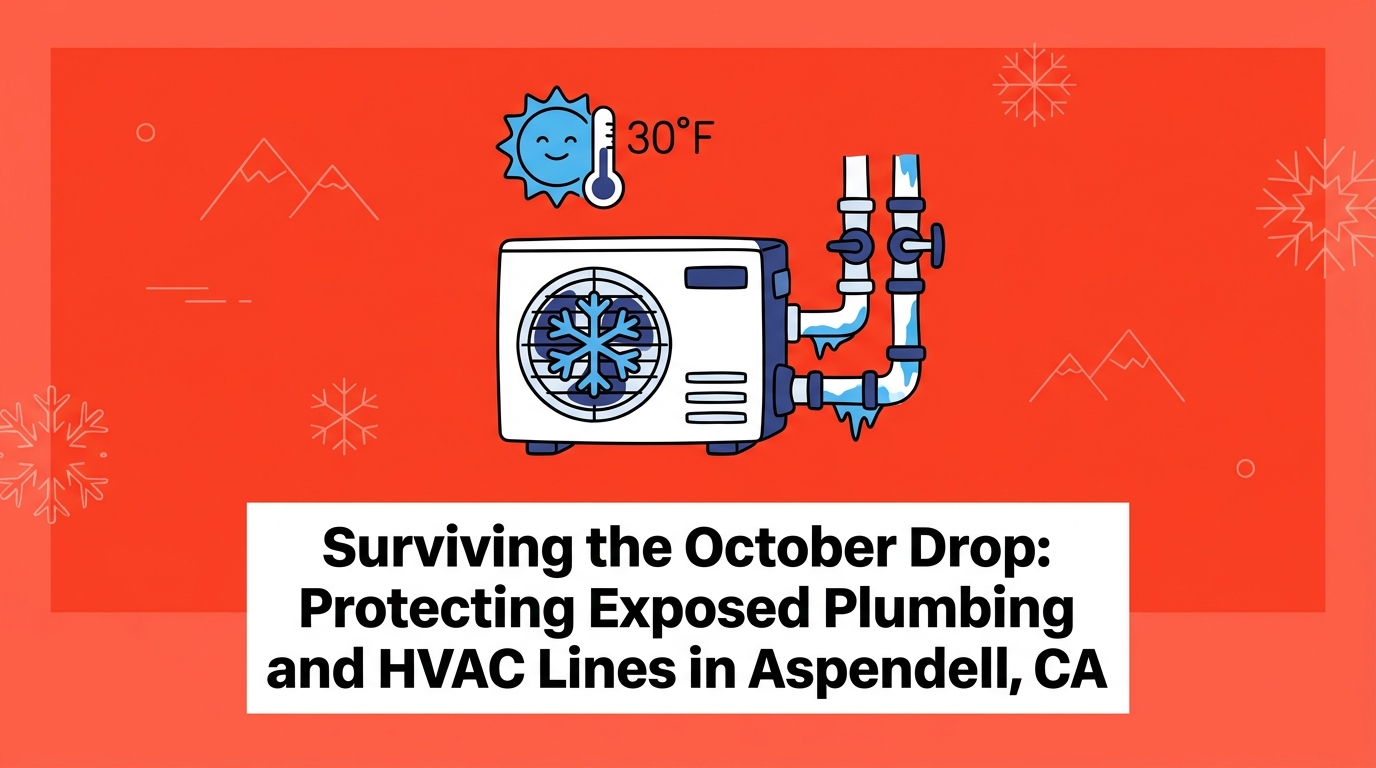
The immediate threat comes from the sheer speed of an October early-season hard freeze. While lower-elevation cities might experience a slow, gradual cooling trend, mountain communities face plunging thermometers that can freeze standing water in hours. When this happens, exposed plumbing fixtures and HVAC condensate drains become highly vulnerable to freezing, expanding, and cracking under immense pressure.
Commonly overlooked vulnerabilities include:
• Exterior hose bibs: Often left attached to summer garden hoses, trapping water inside the wall.
• Uninsulated supply lines: Running through unheated crawlspaces or along exterior walls.
• HVAC condensate drains: Holding residual moisture from early fall cooling or heating-startup operations.
• Irrigation system backflow preventers: Completely exposed to the ambient air temperature.
The critical decision point for every homeowner is knowing exactly which of these lines are safe to insulate yourself, and which require licensed expertise to winterize properly. Proactive preparation is the only barrier between a cozy autumn evening and a flooded basement the next morning.
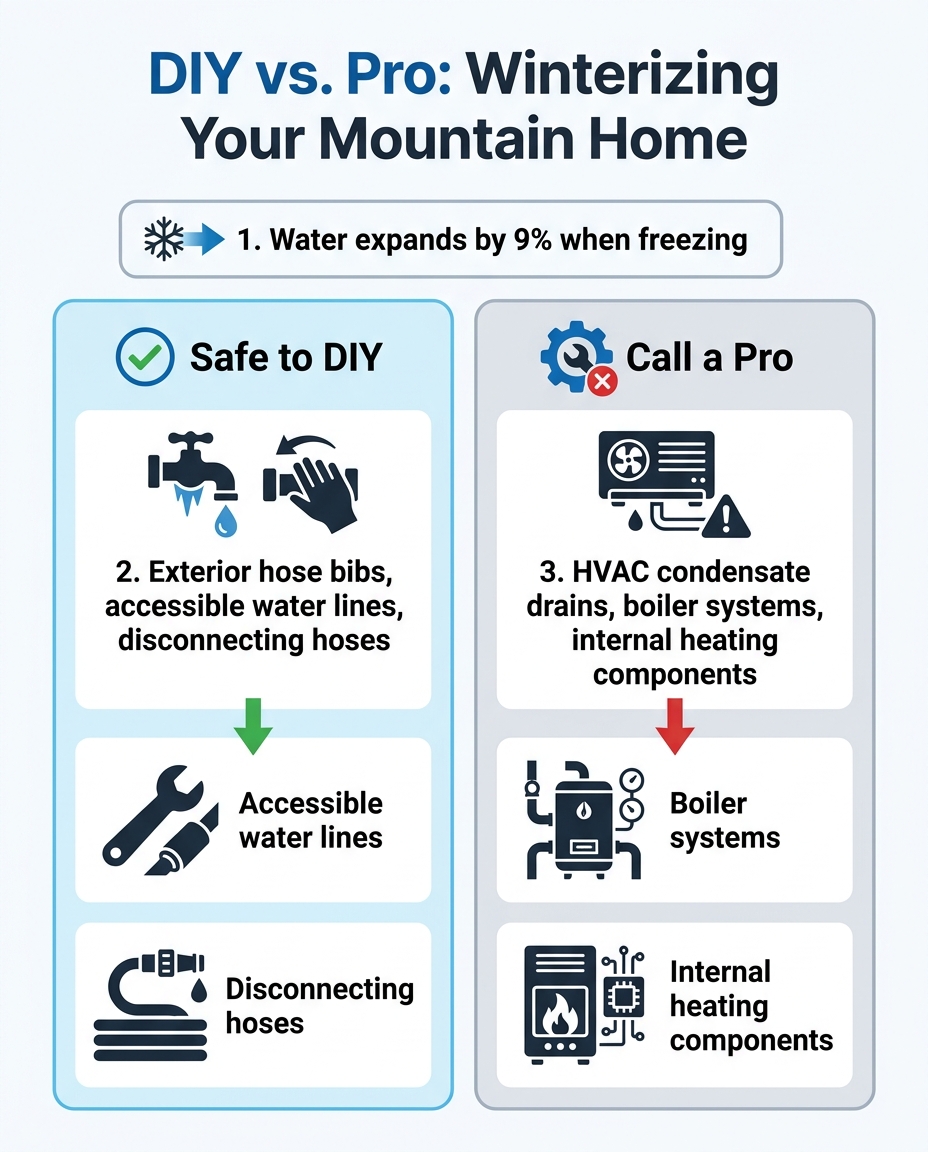
To understand why waiting until November is a recipe for disaster, you have to look at the basic physics of freezing water. When water turns to ice, it expands by approximately 9%. This expansion doesn't just push water out of the way; it creates extreme hydrostatic pressure inside rigid pipes. Standard plumbing materials, including copper and PVC, easily burst under this pressure if they are not properly protected and drained.
Because we have deep local Eastern Sierra expertise at MCR Services Inc., we understand exactly how quickly the weather at 8,500 feet elevation turns dangerous for plumbing. In Aspendell, you do not have the luxury of a prolonged autumn. An overnight cold snap can easily drop temperatures into the teens, instantly freezing any sitting water in your exterior pipes. If you are looking for reliable Aspendell area services, you already know that mountain weather plays by its own rules.
The Difference Between Flatland and Mountain Freezes
• Temperature Drop — Gradual Flatland Winters: Slow decline over several weeks. — High-Altitude Mountain Freezes: Sudden, drastic overnight plunges.
• First Freeze Timing — Gradual Flatland Winters: Late November or December. — High-Altitude Mountain Freezes: October early-season hard freeze.
• Homeowner Warning — Gradual Flatland Winters: Plenty of time to prepare after the first frost. — High-Altitude Mountain Freezes: Almost no warning; immediate action required.
• Pipe Vulnerability — Gradual Flatland Winters: Pipes freeze slowly, giving time to thaw. — High-Altitude Mountain Freezes: Rapid freezing causes immediate bursting.
Waiting for the first snow report is simply too late for initial exterior preparations. The ambient air temperature only needs to dip below freezing for a few hours to cause permanent damage to exposed, uninsulated lines.
While most homeowners are diligent about covering their outdoor faucets, our technicians frequently encounter a major hidden risk during routine pre-winter inspections: the HVAC condensate drain. If you are scheduling your winter heating preparations, understanding this component is vital for the health of your system.
The Problem: An HVAC condensate drain is a small PVC or metal pipe designed to carry away the moisture that your air conditioning or high-efficiency heating system pulls from the air. During the transitional weeks of fall, you might run your system to manage daytime warmth or utilize a heat pump's defrost cycle. This activity leaves residual water sitting in the condensate line.
The Cause: Because this line often exits the home outdoors, it is entirely exposed to the elements. When an October early-season hard freeze hits, that residual trickling water freezes solid. Ice blockages quickly form inside the narrow pipe, creating a plug that prevents any further moisture from draining away from your HVAC unit.
The Solution: The immediate consequence of a frozen condensate line is a system backup. Modern HVAC units are equipped with safety switches that will shut the entire system down if water backs up, leaving you without heat on a freezing night. Worse, if the safety switch fails, that water will overflow directly into your home, causing severe water damage to floors, ceilings, and drywall. Protecting these lines requires specific insulation techniques that go beyond basic pipe wrapping, setting the stage for understanding when to call a professional.
Tackling basic exterior winterization is a highly effective way to protect your property, provided you stick to accessible, standard plumbing. A weekend afternoon spent securing your home in Aspendell can save you from massive headaches later in the season. Here is a safe, actionable checklist for the tasks you can handle yourself.
Not all insulation is created equal, especially when dealing with mountain climates. You need materials that can withstand high winds, moisture, and extreme cold.
• Foam tubing (Pipe sleeves): Select high R-value closed-cell foam tubing. Make sure the inner diameter matches your pipe size perfectly so there are no air gaps.
• Fiberglass insulation rolls: Useful for wrapping wider or awkwardly shaped valves, but it must be wrapped in a weatherproof barrier to stay dry.
• Weatherproof tape: Standard duct tape will peel off in freezing temperatures. Use specialized weatherproof or foil insulation tape to secure your foam sleeves.
• Insulated faucet covers: Hard plastic shells with foam backing that strap tightly over exterior hose bibs.
Once you have the right materials, follow a strict process to ensure your exterior plumbing is fully isolated from the cold.
1. Disconnect all garden hoses: This is the most critical step. A connected hose traps water inside the spigot and the pipe leading into your house. When that water freezes, the pressure travels backward and bursts the pipe inside your wall.
2. Drain residual water: If your home has dedicated shut-off valves for exterior plumbing, turn them off. Then, open the outside spigots to let any remaining water drain out completely.
3. Measure and cut insulation: Cut your foam tubing to the exact length of any exposed exterior pipes. Slip the tube over the pipe, ensuring the slit is completely sealed.
4. Tape securely: Wrap the weatherproof tape around the foam tubing every few inches to keep it tightly closed against the elements.
5. Apply faucet covers: Hook the internal loop of the insulated cover over the spigot handle, push the cover flush against the exterior wall, and pull the string tight to lock out cold air.
Remember, these steps are strictly for accessible, standard exterior plumbing. Attempting to insulate complex mechanical systems requires a different approach.
While wrapping a garden spigot is a straightforward weekend chore, dealing with internal HVAC components, complex boiler systems, and integrated condensate lines requires specialized knowledge. Specialized high-altitude mountain winterization requires local experts who understand complex heating systems, rather than generic handymen who might overlook critical safety protocols.
A pattern we see often at MCR Services Inc. involves homeowners waiting until systems fail. Just last season, a local homeowner reached out during an early freeze when their complex network of boilers, heat pumps, and integrated HVAC systems required emergency comprehensive servicing. Because these setups are intricate, our technicians were dispatched to provide knowledgeable, specialized service, ensuring the entire system was optimized and protected against the harsh mountain climate without risking damage to the delicate internal components.
Where DIY Ends and Professional Service Begins:
• Blowing out lines: Never attempt to use an air compressor to blow out HVAC lines or intricate plumbing networks without proper licensing. Incorrect pressure settings can instantly rupture seals and destroy expensive equipment.
• Dismantling HVAC components: Opening your furnace or heat pump to access internal drain pans voids warranties and exposes you to high-voltage electrical hazards.
• Boiler winterization: Hydronic heating systems require precise chemical balances (like antifreeze ratios) that must be calculated and tested by a certified technician.
When an October early-season hard freeze is in the forecast, bringing in an expert guarantees that your warranties remain intact and your systems are safe for the heavy usage ahead. Furthermore, pre-winter inspections are an excellent time to ask your technician about how federal tax credits may apply to qualifying heat pump installations. If you are unsure about the state of your deep plumbing lines, scheduling professional plumbing services provides the peace of mind that comes from a thorough, certified evaluation.

The timeline for protecting your property is incredibly short. Acting now, rather than waiting for the first major snowstorm, is the only way to ensure your home survives the seasonal transition unscathed. In Aspendell, the weather does not wait for you to be ready.
A successful winterization strategy relies on a dual approach: executing your safe DIY exterior plumbing insulation while simultaneously scheduling professional HVAC system checks. We highly encourage every homeowner to conduct a full property walk-through this week. Walk the perimeter of your house, check every spigot, look for exposed irrigation lines, and visually inspect the exit point of your HVAC condensate drain.
Integrating these specific pipe and equipment steps into a broader routine ensures nothing is missed. If you want to be completely thorough, reviewing a comprehensive seasonal home prep checklist will help you identify drafts, roof vulnerabilities, and insulation gaps that also need attention before the snow flies.
The most effective way to protect your HVAC condensate line is to have a professional insulate it with specialized, weather-rated materials. Because these lines hold residual water from the defrost cycle, they are highly prone to ice blockages during an October early-season hard freeze. A licensed technician can also install freeze protection mechanisms or reroute the drain to a safer location.
Any pipe that is exposed to ambient outdoor air must be insulated. This includes exterior hose bibs, exposed water supply lines running along the siding, irrigation system backflow preventers, and lines located in unheated crawlspaces. Using high-quality closed-cell foam tubing and weatherproof tape provides the best defense against sudden temperature drops.
You should begin winterizing your mountain home in early fall, well before the end of October. High-altitude climates experience sudden, drastic overnight freezes long before lower elevations do. Waiting until November or December guarantees that your exposed plumbing will face freezing temperatures unprotected.
Outside pipes can begin to freeze when the ambient air temperature drops to 20 degrees Fahrenheit or lower for a sustained period. However, in high-wind mountain environments, the wind chill can cause exposed, uninsulated pipes to freeze even faster. Any drop below 32 degrees requires caution and preparation.
Yes, the refrigerant lines and condensate drains connected to your outdoor AC or heat pump unit should be properly insulated. While refrigerant itself doesn't freeze easily, the condensate drain carries water that will freeze solid, and damaged insulation on refrigerant lines reduces the efficiency of your heat pump during the winter months.
High-altitude homes sit in thinner air that loses heat rapidly as soon as the sun goes down. This geography creates a climate where daytime temperatures might feel like mild autumn, but nighttime temperatures plummet below freezing. This rapid fluctuation demands early, proactive winterization to prevent sudden pipe bursts.
Early preparation is the absolute best defense against the devastating effects of burst pipes and failed heating equipment. Our team at MCR Services Inc. encourages you to complete your exterior DIY insulation steps this week to protect your Aspendell home. Don't wait until the schedule is completely booked—reach out to schedule professional assessments for your complex HVAC and plumbing systems today, ensuring you have clear, actionable guidance and total peace of mind all winter long.